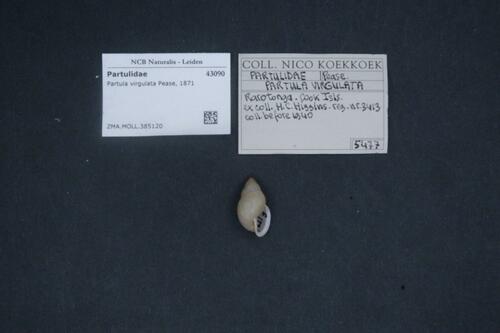
Rarotonga Tree Snail
Partula assimilis
Photo: Photo: Pease, 1871, no known copyright restrictions (public domain)
Overview
Partula assimilis, also known as the Rarotonga tree snail, is a species of land snail that belongs to the family Partulidae. It is endemic to the island of Rarotonga, which is located in Cook Islands.
Partula assimilis faces extinction primarily due to predation by the introduced carnivorous snail Euglandina rosea, which was deliberately introduced to Pacific islands in the 1970s as a misguided biological control agent. The species has also suffered from habitat destruction through deforestation and agricultural conversion of its native forest environments. Competition from other introduced species and the small, fragmented nature of remaining populations further threaten this critically endangered Polynesian tree snail.
Habitat
Partula assimilis inhabits native tropical forests and woodland areas in French Polynesia, typically found on vegetation and tree trunks in humid, shaded environments. The species requires intact forest canopy cover and specific microhabitat conditions that maintain appropriate moisture levels for survival.
Other threatened species in PARTULIDAE

Threatened in Cook Islands
Frequently asked questions
Why is Rarotonga Tree Snail classified as Critically Endangered?
Where does Rarotonga Tree Snail live?
What are the main threats to Rarotonga Tree Snail?
Get weekly conservation intelligence
One short digest a week of the most striking species and country data we ship, plus breaking conservation news paired with our database where it matters.
Free, no spam. One-click unsubscribe in every email.