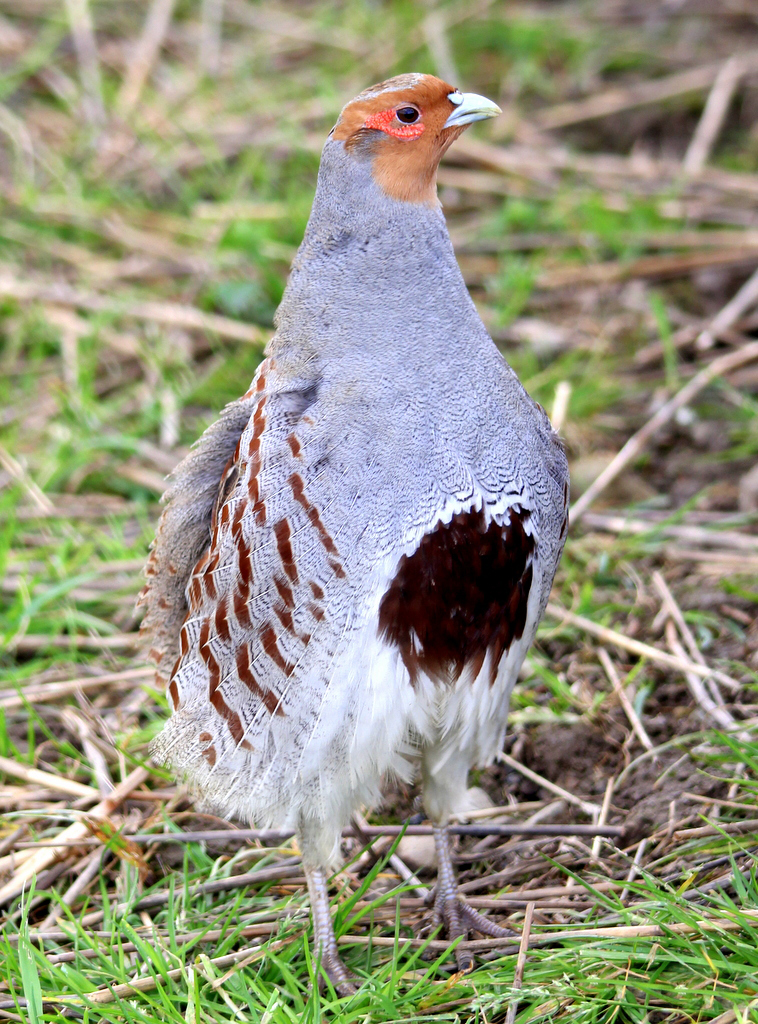
Common Partridge
Perdix perdix
Photo: Wikimedia Commons (CC) via https://en.wikipedia.org/wiki/Grey_partridge
Overview
A detailed profile for this species is sourced from the IUCN Red List of Threatened Species as assessments become available.
The Grey Partridge has experienced severe population declines across its range, primarily due to agricultural intensification that has eliminated the diverse weed communities and invertebrate prey essential for chick survival. Modern farming practices, including increased pesticide use and the shift from spring to autumn sowing, have reduced food availability during the critical breeding season. Habitat fragmentation through hedgerow removal and field enlargement has further reduced nesting sites and winter cover.
Habitat
Grey Partridges inhabit open agricultural landscapes, particularly mixed farmland with a mosaic of arable fields, grasslands, and hedgerows. They prefer areas with diverse crop rotations, field margins rich in weeds and insects, and adequate cover for nesting and roosting.
Other threatened species in Phasianidae


Frequently asked questions
Why is Common Partridge classified as Vulnerable?
Where does Common Partridge live?
What are the main threats to Common Partridge?
Get weekly conservation intelligence
One short digest a week of the most striking species and country data we ship, plus breaking conservation news paired with our database where it matters.
Free, no spam. One-click unsubscribe in every email.