
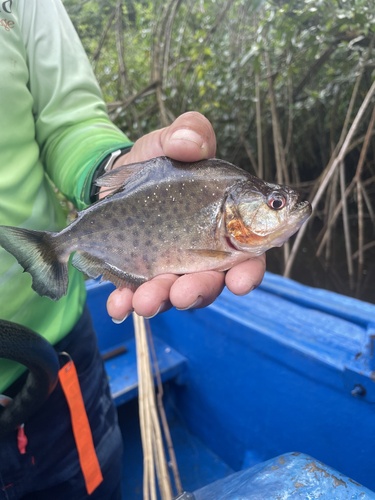
Ossubtus xinguense
Photo: Wikimedia Commons (CC) via https://en.wikipedia.org/wiki/Ossubtus
Overview
A detailed profile for this species is sourced from the IUCN Red List of Threatened Species as assessments become available.
Ossubtus xinguense faces primary threats from deforestation and habitat fragmentation within the Xingu River basin of Brazil. Dam construction and hydroelectric projects along the Xingu River system have altered water flow patterns and degraded critical aquatic habitats. Agricultural expansion, particularly cattle ranching and soy cultivation, continues to reduce forest cover in the species' limited range.
Habitat
This species inhabits freshwater environments within the Xingu River basin in the Brazilian Amazon. It is typically found in clear water streams and tributaries with sandy or rocky substrates surrounded by intact rainforest.
Other threatened species in SERRASALMIDAE
Threatened in Brazil


Frequently asked questions
Why is Ossubtus xinguense classified as Vulnerable?
Where does Ossubtus xinguense live?
What are the main threats to Ossubtus xinguense?
Get weekly conservation intelligence
One short digest a week of the most striking species and country data we ship, plus breaking conservation news paired with our database where it matters.
Free, no spam. One-click unsubscribe in every email.