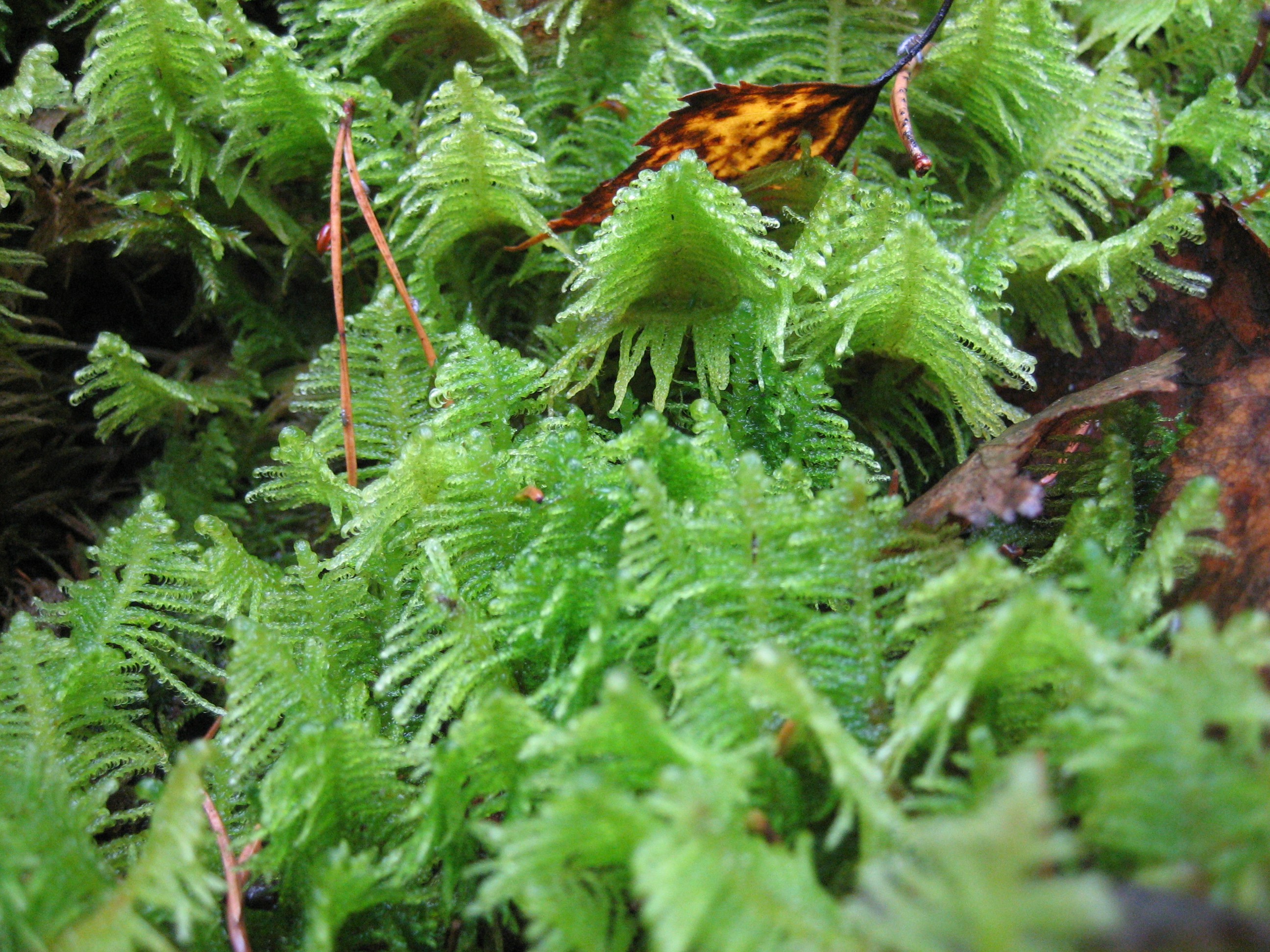
Ostrich-plume Moss
Ptilium crista-castrensis
Conservation status data sourced from the IUCN Red List of Threatened Species.
Photo: Wikimedia Commons (CC) via https://en.wikipedia.org/wiki/Ptilium_crista-castrensis
Taxonomy & Classification
Kingdom
Plantae
Phylum
Bryophyta
Class
Bryopsida
Order
Hypnales
Family
Pylaisiaceae
Genus
Ptilium
Ostrich-plume Moss belongs to the family Pylaisiaceae, order Hypnales, within the Bryopsida class.
Species Profile
Species profile data sourced from the IUCN Red List of Threatened Species.
Ostrich-plume Moss faces severe threats from habitat destruction due to deforestation, logging, and land conversion in its specialized boreal and montane forest ecosystems. Climate change poses an additional critical threat by altering temperature and moisture regimes essential for this species' survival, while air pollution and acid deposition further degrade the delicate conditions required for moss growth and reproduction.
Key Facts
Habitat & Distribution
Ostrich-plume Moss inhabits mature coniferous and mixed boreal forests, particularly growing on decaying logs, forest floor, and occasionally on tree bases in cool, humid microenvironments. It requires stable moisture conditions and filtered light typical of old-growth forest understories in northern temperate and subarctic regions.
Threats
IUCN Red List: Critically Endangered
Ostrich-plume Moss faces severe threats from habitat destruction due to deforestation, logging, and land conversion in its specialized boreal and montane forest ecosystems. Climate change poses an additional critical threat by altering temperature and moisture regimes essential for this species' survival, while air pollution and acid deposition further degrade the delicate conditions required for moss growth and reproduction.
Air pollution and acid deposition
Climate change altering temperature and moisture patterns
Deforestation and logging activities
Habitat fragmentation from land development
Changes in forest canopy structure affecting microclimate
National vs Global Threat Status
How this species is assessed at the national level compared to its IUCN global status (CR).
| Country | National Status | Global Status | Comparison |
|---|---|---|---|
| EU | LCLeast Concern | CRCritically Endangered | Lower local risk |
| EU | LCLeast Concern | CRCritically Endangered | Lower local risk |
National Red List data sourced from the National Red List Project (nationalredlist.org, ZSL) and country-specific Red List authorities.
Community Sightings
Report a sightingNo community sightings yet. Be the first to report!
Sources & Attribution
How to Cite
IUCN: IUCN (2025). The IUCN Red List of Threatened Species. Version 2025-1. Available at: https://www.iucnredlist.org. doi:10.2305/IUCN.UK.2025-1.RLTS
GBIF: GBIF.org (2025). GBIF Home Page. Available at: https://www.gbif.org
National Red Lists: ZSL (2025). National Red List. Zoological Society of London. Available at: https://www.nationalredlist.org
This page: SpeciesRadar (2025). Ostrich-plume Moss (Ptilium crista-castrensis). SpeciesRadar: Intelligence for Earth's Biodiversity. Available at: https://speciesradar.org/species/ostrich-plume-moss