
Orestias cuvieri
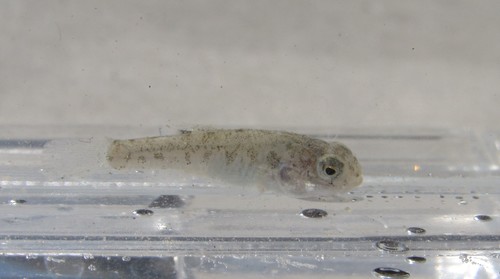
Photo: Wikimedia Commons (CC BY-SA) — Species of fish
Overview
The Titicaca orestias, Lake Titicaca orestias, or Lake Titicaca flat-headed fish, also known by its native name amanto, is a likely extinct freshwater killifish from Lake Titicaca in South America. It belongs in the pupfish genus Orestias, endemic to lakes, rivers and streams in the Andean highlands. With a total length of up to 27 cm (10.6 in), it was the largest member in that genus.
In the hope that an undiscovered population remains, it is listed as Critically Endangered, possibly extinct by the IUCN. Despite its common name, it is not the only Orestias from Lake Titicaca.
Orestias cuvieri faces severe threats from water extraction and diversion for agricultural and mining activities in the Altiplano region, which has dramatically reduced water levels in its native lake systems. Introduced trout species compete directly for resources and prey upon native pupfish populations. Climate change exacerbates these pressures through altered precipitation patterns and increased evaporation rates in high-altitude aquatic environments.
Habitat
This endemic pupfish inhabits high-altitude freshwater lakes and associated wetlands in the Altiplano of Peru and Bolivia, typically at elevations above 3,500 meters. The species requires shallow, well-oxygenated waters with specific temperature and salinity ranges found in these isolated Andean lake systems.
Other threatened species in CYPRINODONTIDAE

Frequently asked questions
Why is Orestias cuvieri classified as Critically Endangered?
Where does Orestias cuvieri live?
What are the main threats to Orestias cuvieri?
Get weekly conservation intelligence
One short digest a week of the most striking species and country data we ship, plus breaking conservation news paired with our database where it matters.
Free, no spam. One-click unsubscribe in every email.