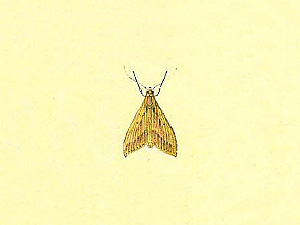
Telegraphic Hedyleptan Moth
Omiodes telegrapha
Photo: Wikimedia Commons (CC) via https://en.wikipedia.org/wiki/Omiodes_telegrapha
Overview
Omiodes telegrapha, the telegraphic hedyleptan moth, is a species of moth in the family Crambidae. It is endemic to the island of Hawaii.
Omiodes telegrapha faces severe population decline primarily due to habitat destruction from agricultural expansion and urban development across its limited range. The species' specialized feeding requirements on native host plants make it particularly vulnerable to ecosystem fragmentation. Invasive plant species have further degraded remaining habitat quality, while climate change threatens to shift suitable habitat zones beyond the moth's dispersal capabilities.
Habitat
This moth species inhabits native grasslands and shrublands, requiring specific host plants for larval development. It typically occurs in areas with intact native vegetation communities that support its specialized ecological requirements.
Other threatened species in CRAMBIDAE
Frequently asked questions
Why is Telegraphic Hedyleptan Moth classified as Critically Endangered?
Where does Telegraphic Hedyleptan Moth live?
What are the main threats to Telegraphic Hedyleptan Moth?
Get weekly conservation intelligence
One short digest a week of the most striking species and country data we ship, plus breaking conservation news paired with our database where it matters.
Free, no spam. One-click unsubscribe in every email.