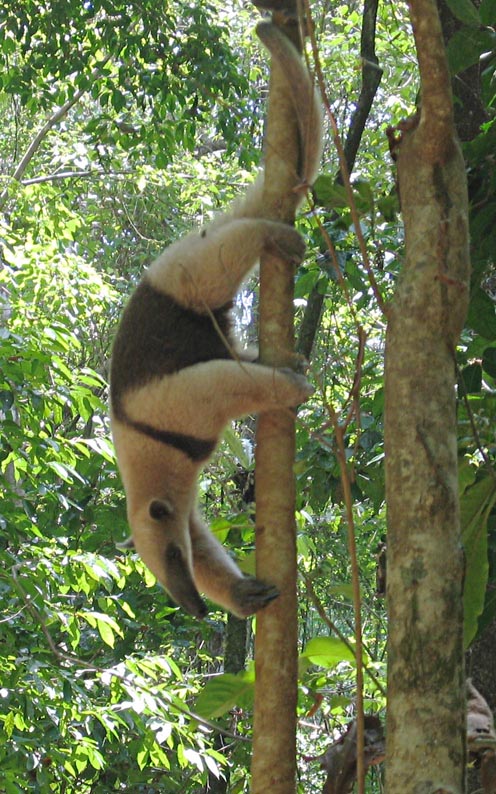
Northern Tamandua
Tamandua mexicana
Photo: Wikimedia Commons (CC) via https://en.wikipedia.org/wiki/Northern_tamandua
Overview
A detailed profile for this species is sourced from the IUCN Red List of Threatened Species as assessments become available.
The Northern Tamandua faces mounting pressure from rapid deforestation across its range, with agricultural expansion and cattle ranching fragmenting the continuous forest corridors essential for its arboreal lifestyle. Road development creates deadly barriers, as these slow-moving mammals are frequently struck by vehicles when crossing between forest patches. Hunting pressure has intensified in some regions where tamanduas are captured for the illegal pet trade or killed due to misconceptions about their danger to humans.
Habitat
Northern Tamanduas inhabit tropical and subtropical forests from sea level to 1,500 meters elevation, including primary rainforests, secondary growth, gallery forests, and woodland savannas. They require continuous canopy cover for their primarily arboreal lifestyle, using their prehensile tails and strong claws to navigate between trees while foraging for ants and termites.
Frequently asked questions
Why is Northern Tamandua classified as Vulnerable?
Where does Northern Tamandua live?
What are the main threats to Northern Tamandua?
Get weekly conservation intelligence
One short digest a week of the most striking species and country data we ship, plus breaking conservation news paired with our database where it matters.
Free, no spam. One-click unsubscribe in every email.