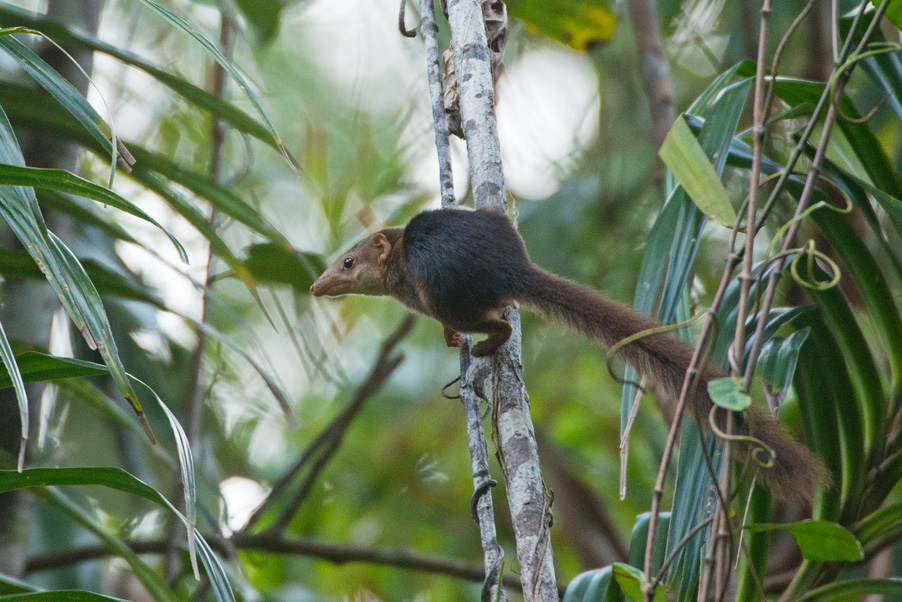
Nicobar Treeshrew
Tupaia nicobarica
Photo: Wikimedia Commons (CC) via https://en.wikipedia.org/wiki/Nicobar_treeshrew
Overview
A detailed profile for this species is sourced from the IUCN Red List of Threatened Species as assessments become available.
The Nicobar treeshrew faces severe habitat loss due to deforestation and agricultural expansion across the Nicobar Islands. Its restricted range makes it particularly vulnerable to habitat fragmentation, while introduced species and human settlement development further reduce available forest cover. The species' dependence on intact forest ecosystems means that even small-scale habitat modifications can have disproportionate impacts on local populations.
Habitat
The Nicobar treeshrew inhabits primary and secondary tropical forests across the Nicobar Islands, preferring dense canopy cover with abundant fruiting trees. It occupies both lowland and hill forests, typically remaining in the upper canopy layers where it forages for insects, fruits, and small vertebrates.
Conservation measures underway
Other threatened species in TUPAIIDAE

Frequently asked questions
Why is Nicobar Treeshrew classified as Endangered?
Where does Nicobar Treeshrew live?
What are the main threats to Nicobar Treeshrew?
Get weekly conservation intelligence
One short digest a week of the most striking species and country data we ship, plus breaking conservation news paired with our database where it matters.
Free, no spam. One-click unsubscribe in every email.