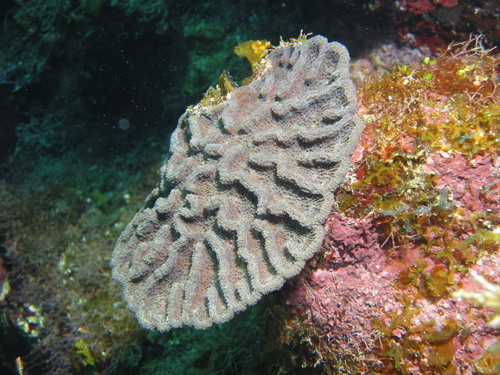
Lowridge Cactus Coral
Mycetophyllia danaana
Photo: Photo: (c) jome jome, some rights reserved (CC BY-NC-ND)
Overview
The Lowridge Cactus Coral (Mycetophyllia danaana) is a small, plating and encrusting stony coral belonging to the family Meandrinidae, named for its low-relief, ridged skeletal structure resembling the fluted surfaces of a cactus. Colonies form flattened or slightly undulating plates with meandering valleys and ridges across the coral surface, typically displaying muted brown, tan, or greenish-grey tissue coloration. This species is found in the wider Caribbean basin, inhabiting deeper reef slopes and fore-reef environments where reduced light levels favor its low, plate-like growth form over more massive coral structures.
Mycetophyllia danaana is classified as Critically Endangered (CR) by the IUCN, with population trends assessed as decreasing across its range. The species has suffered severe declines linked to recurring coral disease outbreaks, particularly Stony Coral Tissue Loss Disease (SCTLD), which has swept through Caribbean reefs and disproportionately affected meandrinid corals with limited tissue regeneration capacity. Rising sea surface temperatures have intensified bleaching events, while sedimentation and nutrient runoff from coastal development further degrade the deeper reef habitats this species depends on.
Because Mycetophyllia species grow slowly and reproduce primarily through broadcast spawning, recovery from mass mortality events is exceptionally slow, compounding population losses. Conservation efforts across the Caribbean now include coral rescue and land-based gene banking initiatives, disease intervention treatments applied directly to affected colonies, and expanded marine protected area coverage in reef zones where remnant populations persist. Encouragingly, several restoration programs in Florida and the wider Caribbean have successfully cryopreserved coral gametes and maintained ex situ nurseries for closely related Mycetophyllia species, offering a genetic safety net and cautious optimism that assisted propagation techniques could eventually support wild population recovery for this critically endangered coral.
Mycetophyllia danaana faces severe population declines primarily due to coral bleaching events triggered by rising sea temperatures and ocean acidification. The species is particularly vulnerable to white plague disease and other coral pathogens that have devastated Caribbean reef systems. Coastal development and sedimentation from land-based activities further degrade the clear, nutrient-poor waters this coral requires for survival.
Habitat
This hard coral species inhabits shallow to moderate depth reef environments in the Caribbean, typically found on fore-reef slopes and reef walls between 5-40 meters depth. It requires clear, warm tropical waters with low nutrient levels and strong water circulation to support its symbiotic zooxanthellae.
Conservation measures underway
Other threatened species in FAVIIDAE

Threatened in Bahamas


Frequently asked questions
Why is Lowridge Cactus Coral classified as Critically Endangered?
Where does Lowridge Cactus Coral live?
What are the main threats to Lowridge Cactus Coral?
Get weekly conservation intelligence
One short digest a week of the most striking species and country data we ship, plus breaking conservation news paired with our database where it matters.
Free, no spam. One-click unsubscribe in every email.