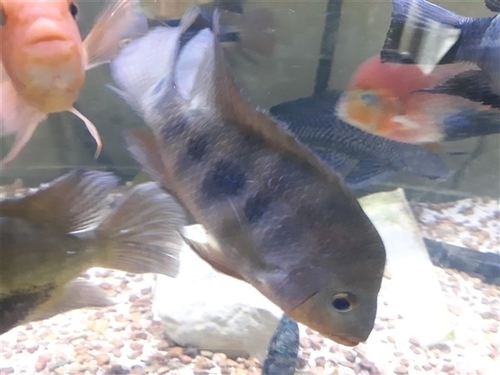
Amphilophus chancho
Photo: (c) Marcellus J. Gilreath, M.D., MFS, FABHP, MABHP, FACOCP, some rights reserved (CC BY-NC), uploaded by Marcellus J. Gilreath, M.D., MFS, FABHP, MABHP, FACOCP
Overview
Amphilophus chancho is a critically endangered cichlid fish endemic to Lake Managua in Nicaragua. This freshwater species belongs to the Midas cichlid complex, a group of closely related Central American cichlids known for their ecological and evolutionary significance. The species exhibits typical cichlid characteristics including parental care behaviors and territorial tendencies.
Like other members of its genus, A. chancho likely feeds on a varied diet of invertebrates, plant matter, and small organisms found within its lake ecosystem. The species faces severe population decline due to multiple anthropogenic pressures affecting its limited habitat range.
Lake Managua has experienced significant environmental degradation over recent decades, including pollution from industrial and agricultural sources, sewage discharge, and habitat modification. The lake's water quality has deteriorated substantially, creating challenging conditions for native fish populations. Additionally, the introduction of non-native species has altered the ecological balance and increased competition for resources.
The species' extremely restricted range makes it particularly vulnerable to environmental changes, as the entire population depends on the health of a single water body. Conservation efforts for A. chancho are complicated by the broader environmental challenges facing Lake Managua.
Addressing the species' critical status requires comprehensive lake restoration initiatives, pollution control measures, and habitat protection strategies. Research into the species' specific ecological requirements and population dynamics remains important for developing targeted conservation approaches.
Amphilophus chancho faces severe threats from water pollution, habitat degradation, and the introduction of non-native species in Lake Managua. The species' entire population is confined to a single lake system that has experienced significant environmental deterioration. Industrial pollution, agricultural runoff, and sewage discharge have compromised water quality throughout its limited range.
Habitat
Amphilophus chancho is endemic to Lake Managua, a large freshwater lake in Nicaragua. The species inhabits the lake's littoral and benthic zones, typically associated with rocky substrates and areas with adequate water circulation.
Conservation measures underway
Other threatened species in CICHLIDAE

Threatened in Nicaragua

Frequently asked questions
Why is Amphilophus chancho classified as Critically Endangered?
Where does Amphilophus chancho live?
What are the main threats to Amphilophus chancho?
Get weekly conservation intelligence
One short digest a week of the most striking species and country data we ship, plus breaking conservation news paired with our database where it matters.
Free, no spam. One-click unsubscribe in every email.