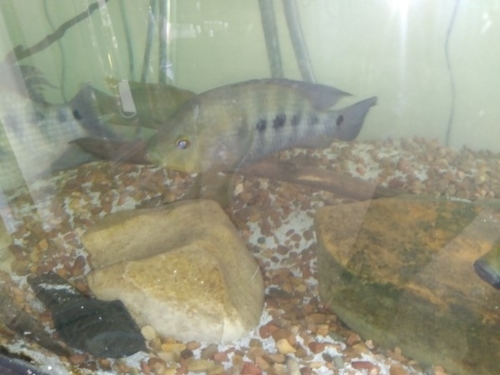
Amphilophus flaveolus
Photo: (c) Marcellus J. Gilreath, M.D., MFS, FABHP, MABHP, FACOCP, some rights reserved (CC BY-NC), uploaded by Marcellus J. Gilreath, M.D., MFS, FABHP, MABHP, FACOCP
Overview
Amphilophus flaveolus is a critically endangered cichlid fish endemic to Nicaragua's crater lakes. This freshwater species belongs to the Midas cichlid complex, a group known for remarkable adaptive radiation within isolated volcanic crater lakes. The species exhibits the characteristic robust body plan of Amphilophus cichlids, with specialized feeding adaptations that have evolved in response to the unique ecological conditions of its crater lake environment.
Like other members of its genus, A. flaveolus displays complex social behaviors and parental care typical of Central American cichlids. The species faces severe population decline due to multiple anthropogenic pressures affecting its highly restricted habitat.
Introduction of non-native species has disrupted the delicate ecological balance of the crater lake ecosystem, leading to increased competition and predation pressure. Habitat degradation from agricultural runoff and human activities around the lake has further compromised water quality and ecosystem integrity. The species' extremely limited geographic range makes it particularly vulnerable to environmental changes and stochastic events.
Conservation efforts focus on habitat protection and monitoring of water quality parameters, though the species' precarious status requires immediate and sustained intervention. Research into the ecology and population dynamics of A. flaveolus continues to inform conservation strategies, while efforts to control invasive species and reduce anthropogenic impacts on the crater lake ecosystem remain critical for the species' survival.
Amphilophus flaveolus faces severe threats from introduced non-native fish species that compete for resources and alter ecosystem dynamics. Agricultural runoff and human activities around its crater lake habitat have degraded water quality and ecosystem integrity.
Habitat
This species is endemic to crater lakes in Nicaragua, inhabiting the specialized freshwater environments formed within volcanic craters. These isolated aquatic systems provide unique ecological conditions that have driven the evolution of endemic cichlid species complexes.
Conservation measures underway
Other threatened species in CICHLIDAE

Threatened in Nicaragua

Frequently asked questions
Why is Amphilophus flaveolus classified as Critically Endangered?
Where does Amphilophus flaveolus live?
What are the main threats to Amphilophus flaveolus?
Get weekly conservation intelligence
One short digest a week of the most striking species and country data we ship, plus breaking conservation news paired with our database where it matters.
Free, no spam. One-click unsubscribe in every email.