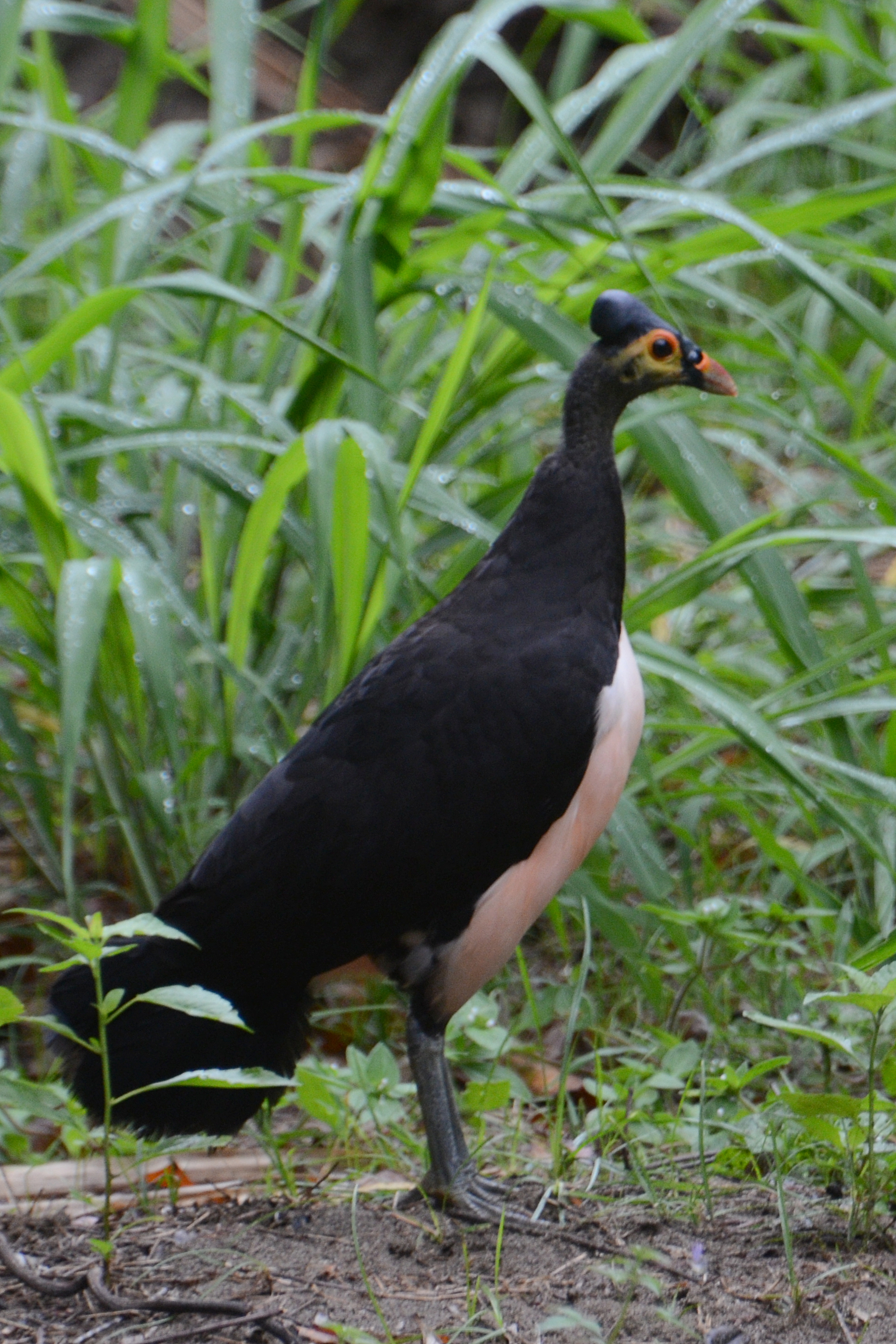
Maleo
Macrocephalon maleo
Photo: Wikimedia Commons (CC) via https://en.wikipedia.org/wiki/Maleo
Overview
A detailed profile for this species is sourced from the IUCN Red List of Threatened Species as assessments become available.
The Maleo faces severe population decline primarily due to extensive egg harvesting for human consumption, with local communities traditionally collecting eggs from communal nesting grounds. Habitat destruction through deforestation and mining activities has eliminated critical nesting beaches and reduced available foraging areas. Introduced predators, particularly pigs and dogs, destroy nests and prey on eggs, while coastal development has disrupted traditional nesting sites along beaches.
Habitat
The Maleo inhabits lowland tropical rainforests of Sulawesi, requiring both dense forest for foraging and specific nesting sites including volcanic soils, sun-heated beaches, and geothermally active areas. These megapodes depend on natural heat sources to incubate their eggs, making them highly dependent on undisturbed coastal areas and geothermal sites.
Conservation measures underway
Other threatened species in MEGAPODIIDAE


Threatened in Indonesia

Frequently asked questions
Why is Maleo classified as Critically Endangered?
Where does Maleo live?
What are the main threats to Maleo?
Get weekly conservation intelligence
One short digest a week of the most striking species and country data we ship, plus breaking conservation news paired with our database where it matters.
Free, no spam. One-click unsubscribe in every email.