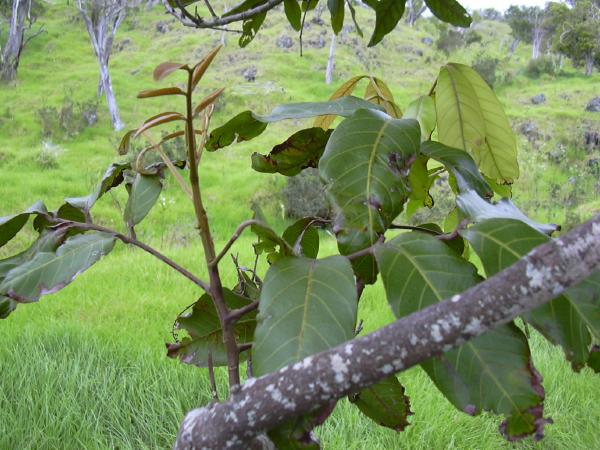
Hawai'i alectryon
Alectryon macrococcum
Photo: Photo: via Wikimedia Commons Public domain
Overview
Mahoe (Alectryon macrococcum) is a rare endemic tree species found in New Zealand, characterized by its distinctive large, glossy compound leaves and bright red arils that surround its seeds. This medium-sized canopy tree plays a crucial role in forest ecosystems by providing food resources for native birds through its colorful fruits and supporting epiphytic communities on its bark and branches.
Alectryon macrococcum faces severe population decline primarily due to habitat destruction from agricultural expansion and urban development across its limited range. The species' restricted distribution makes it particularly vulnerable to localized threats, with remaining populations fragmented and isolated.
Habitat
Mahoe typically inhabits coastal and lowland podocarp-broadleaf forests, thriving in well-drained soils along forest margins and in canopy gaps. The species shows preference for areas with moderate moisture levels and partial sunlight, often establishing in regenerating forest patches and along stream corridors.
Other threatened species in Sapindaceae

Frequently asked questions
Why is Hawai'i alectryon classified as Critically Endangered?
Where does Hawai'i alectryon live?
What are the main threats to Hawai'i alectryon?
Get weekly conservation intelligence
One short digest a week of the most striking species and country data we ship, plus breaking conservation news paired with our database where it matters.
Free, no spam. One-click unsubscribe in every email.