CRCritically Endangered

loose watermilfoil

Myriophyllum laxum

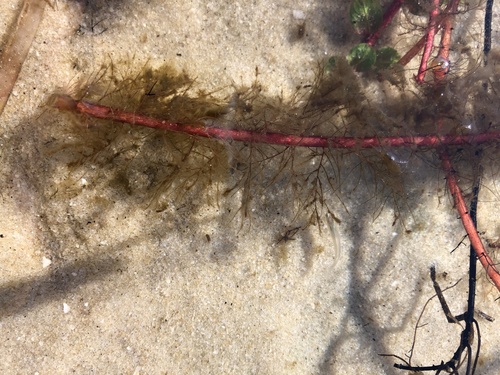
Loose watermilfoil (Myriophyllum laxum) is an aquatic perennial herb characterized by its delicate, feathery submerged leaves arranged in whorls around slender stems. This native aquatic plant plays a crucial ecological role by providing oxygen to water systems, offering shelter and breeding habitat for fish and aquatic invertebrates, and helping to stabilize sediments in freshwater environments.

01Classification

Taxonomy & Classification

Kingdom

Plantae

Phylum

Tracheophyta

Class

Magnoliopsida

Order

Saxifragales

Family

Haloragaceae

Genus

Myriophyllum

loose watermilfoil belongs to the family Haloragaceae, order Saxifragales, within the Magnoliopsida class.

02Description

Species Profile

Loose watermilfoil (Myriophyllum laxum) is an aquatic perennial herb characterized by its delicate, feathery submerged leaves arranged in whorls around slender stems. This native aquatic plant plays a crucial ecological role by providing oxygen to water systems, offering shelter and breeding habitat for fish and aquatic invertebrates, and helping to stabilize sediments in freshwater environments.

Loose watermilfoil (Myriophyllum laxum) is critically endangered primarily due to habitat destruction and degradation of its freshwater wetland environments. The species faces severe pressure from agricultural development, water pollution, and hydrological changes that alter the delicate aquatic ecosystems it depends upon.

Key Facts

IUCN StatusCritically Endangered (CR)
GroupPlants
03Habitat

Habitat & Distribution

Loose watermilfoil inhabits shallow freshwater environments including slow-moving streams, ponds, lakes, and wetland margins with soft substrates. It typically grows in clear to moderately turbid waters at depths ranging from 0.5 to 3 meters, preferring areas with gentle water flow and stable water levels.

04Threats

Threats

!

IUCN Red List: Critically Endangered

Loose watermilfoil (Myriophyllum laxum) is critically endangered primarily due to habitat destruction and degradation of its freshwater wetland environments. The species faces severe pressure from agricultural development, water pollution, and hydrological changes that alter the delicate aquatic ecosystems it depends upon.

Habitat destruction from agricultural expansion

HighOngoing

Hydrological alterations and water level changes

HighOngoing

Water pollution from agricultural runoff

HighOngoing

Climate change impacts on wetland systems

MediumOngoing

Competition from invasive aquatic species

MediumOngoing
Community

Community Sightings

Report a sighting

No community sightings yet. Be the first to report!

07Sources

Sources & Attribution

How to Cite

IUCN: IUCN (2025). The IUCN Red List of Threatened Species. Version 2025-1. Available at: https://www.iucnredlist.org. doi:10.2305/IUCN.UK.2025-1.RLTS

GBIF: GBIF.org (2025). GBIF Home Page. Available at: https://www.gbif.org

This page: SpeciesRadar (2025). loose watermilfoil (Myriophyllum laxum). SpeciesRadar: Intelligence for Earth's Biodiversity. Available at: https://speciesradar.org/species/loose-watermilfoil

Full citation guide & data usage terms