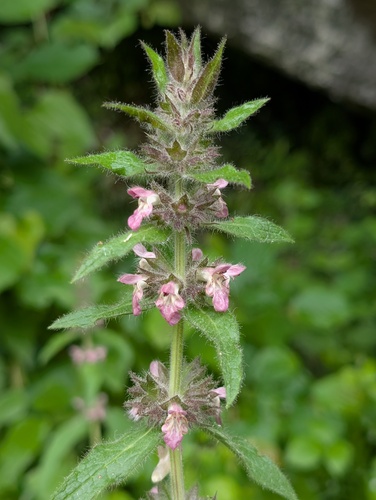
Limestone Woundwort
Stachys alpina
Photo: Photo: (c) Eduardo Fernández Pascual, some rights reserved (CC BY-NC), uploaded by Eduardo Fernández Pascual
Overview
Limestone Woundwort (Stachys alpina) is a perennial herbaceous plant in the mint family, characterized by its distinctive heart-shaped, serrated leaves and spikes of pale yellow to white flowers. This alpine species typically grows 30-60 cm tall and plays an important ecological role as a nectar source for specialized high-altitude pollinators including bees and butterflies.
Limestone Woundwort faces severe population decline due to habitat destruction and fragmentation of its specialized limestone grassland and rocky outcrop environments. The species is particularly vulnerable due to its extremely limited distribution and small population sizes, making it susceptible to local extinctions from human disturbance and natural stochastic events.
Habitat
Limestone Woundwort inhabits rocky limestone outcrops, scree slopes, and crevices in alpine and subalpine zones, typically at elevations between 1,500-2,800 meters. It requires well-drained, calcium-rich soils and thrives in partially shaded areas among boulder fields and cliff faces where snow persists late into the growing season.
Other threatened species in Lamiaceae


Frequently asked questions
Why is Limestone Woundwort classified as Critically Endangered?
Where does Limestone Woundwort live?
What are the main threats to Limestone Woundwort?
Get weekly conservation intelligence
One short digest a week of the most striking species and country data we ship, plus breaking conservation news paired with our database where it matters.
Free, no spam. One-click unsubscribe in every email.