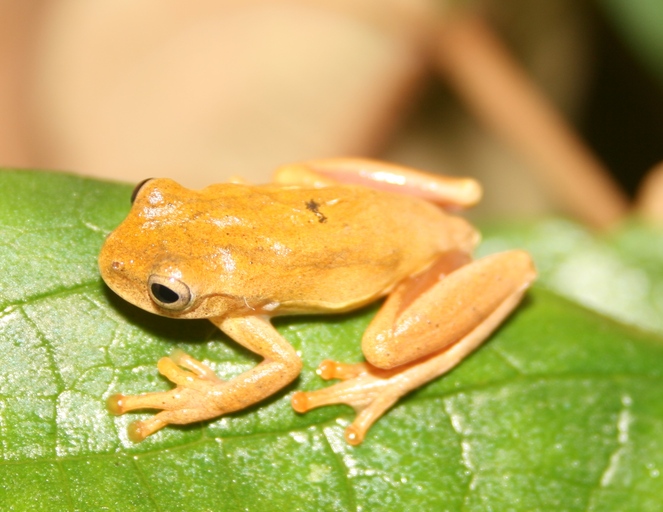
Lesser Treefrog
Dendropsophus minutus
Photo: Wikimedia Commons (CC) via https://en.wikipedia.org/wiki/Dendropsophus_minutus
Overview
Dendropsophus minutus is a species of frog in the family Hylidae. It is found in Argentina, Bolivia, Brazil, Colombia, Ecuador, French Guiana, Guyana, Paraguay, Peru, Suriname, Trinidad and Tobago, Uruguay, and Venezuela. In Spanish it is known as ranita amarilla común.
Habitat destruction from agricultural expansion and urban development has severely fragmented the Lesser Treefrog's breeding sites and forested corridors. Climate change-induced alterations to precipitation patterns threaten the ephemeral pools essential for reproduction, while emerging fungal diseases and pesticide contamination further compromise remaining populations.
Habitat
Lesser Treefrogs inhabit lowland tropical forests near temporary pools, marshes, and slow-moving streams where they breed during rainy seasons. Adults spend most of their time in the forest canopy on leaves and branches of shrubs and small trees within 100 meters of water sources.
Other threatened species in Hylidae


Frequently asked questions
Why is Lesser Treefrog classified as Endangered?
Where does Lesser Treefrog live?
What are the main threats to Lesser Treefrog?
Get weekly conservation intelligence
One short digest a week of the most striking species and country data we ship, plus breaking conservation news paired with our database where it matters.
Free, no spam. One-click unsubscribe in every email.