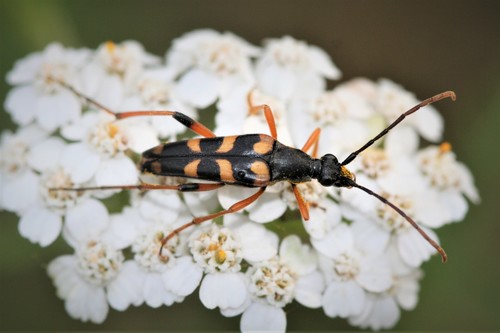
Strangalia attenuata
Photo: Photo: (c) Edmundas Greimas, some rights reserved (CC BY), uploaded by Edmundas Greimas
Overview
Strangalia attenuata is a distinctive longhorn beetle characterized by its notably constricted elytra (wing covers) that give it the common name 'narrow-waisted longhorn beetle.' This medium-sized cerambycid beetle displays elongated antennae and a characteristic narrowing behind the shoulders of its wing covers. As both larva and adult, it plays important ecological roles in forest ecosystems through wood decomposition and pollination services.
Strangalia attenuata faces severe population decline primarily due to habitat loss from deforestation and forest fragmentation, which destroys the old-growth deciduous forests this longhorn beetle species requires for breeding and larval development. Climate change and intensive forest management practices further threaten the remaining suitable habitat patches.
Habitat
Strangalia attenuata inhabits mature deciduous and mixed forests, particularly those containing oak, beech, and other hardwood species with abundant dead wood and fallen logs. The species requires forest environments with a continuous supply of decaying hardwood timber in various stages of decomposition, typically found in undisturbed woodland areas with natural tree mortality cycles.
Other threatened species in Cerambycidae


Frequently asked questions
Why is Strangalia attenuata classified as Critically Endangered?
Where does Strangalia attenuata live?
What are the main threats to Strangalia attenuata?
Get weekly conservation intelligence
One short digest a week of the most striking species and country data we ship, plus breaking conservation news paired with our database where it matters.
Free, no spam. One-click unsubscribe in every email.