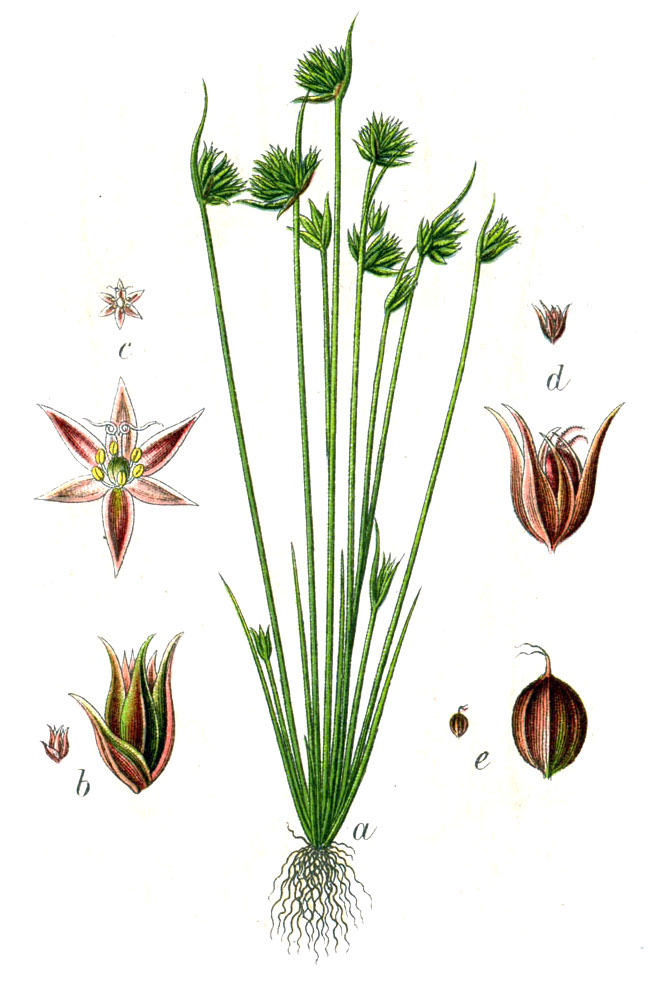
Dwarf Rush
Juncus capitatus
Photo: Wikimedia Commons (CC) via https://en.wikipedia.org/wiki/Juncinella_capitata
Overview
Juncinella capitata is a species of rush known by the common names dwarf rush and leafybract dwarf rush. It is native to Europe, parts of western and central Asia, and parts of northern, eastern, west-central, and southern Africa. It is also an introduced species in parts of North America such as California and the Gulf Coast. It grows in moist areas, such as wet sand, vernal pools, and ditches.
Juncus capitatus faces severe population declines primarily due to habitat loss from agricultural intensification, urban development, and drainage of wetland areas. The species' specialized requirements for temporary pools and seasonally flooded areas make it particularly vulnerable to hydrological changes and land use conversion.
Habitat
The dwarf rush is native to Europe, parts of Western Asia (East Aegean Islands, Turkey, and the Levant), Kazakhstan, and North Africa (Algeria, Libya, Morocco, and Tunisia), East Africa (Ethiopia and Kenya), west-central Africa (Cameroon), and southern Africa (Lesotho and the Cape Provinces, Northern Provinces, and Free State of South Africa). In the British Isles it is only known from Anglesey,...
Other threatened species in Juncaceae


Frequently asked questions
Why is Dwarf Rush classified as Endangered?
Where does Dwarf Rush live?
What are the main threats to Dwarf Rush?
Get weekly conservation intelligence
One short digest a week of the most striking species and country data we ship, plus breaking conservation news paired with our database where it matters.
Free, no spam. One-click unsubscribe in every email.