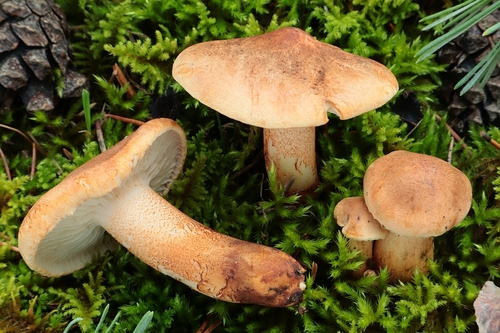
Larch Knight
Tricholoma psammopus
Photo: Photo: (c) Michal Mikšík, some rights reserved (CC BY-NC), uploaded by Michal Mikšík
Overview
The Larch Knight (Tricholoma psammopus) is a distinctive mycorrhizal fungus that forms symbiotic relationships exclusively with larch trees. This medium-sized mushroom features a sandy-brown to grayish cap with a characteristic scaly surface and pale gills, typically fruiting in late autumn. As a mycorrhizal partner, it plays a crucial role in nutrient exchange with larch forests, enhancing tree health and forest ecosystem stability.
The Larch Knight (Tricholoma psammopus) faces severe population decline primarily due to habitat loss from deforestation and land conversion in its limited range. Climate change poses additional pressure by altering the specific environmental conditions required for this mycorrhizal fungus to form associations with its host trees. The species' extremely restricted distribution makes it particularly vulnerable to local extinctions from human activities.
Habitat
Larch Knight occurs in mature larch and mixed coniferous forests with well-drained, slightly alkaline soils rich in organic matter. The species shows strong preference for old-growth stands with established larch trees aged 40+ years, particularly in montane and subalpine zones where soil pH ranges between 6.5-7.5.
Other threatened species in Tricholomataceae


Frequently asked questions
Why is Larch Knight classified as Critically Endangered?
Where does Larch Knight live?
What are the main threats to Larch Knight?
Get weekly conservation intelligence
One short digest a week of the most striking species and country data we ship, plus breaking conservation news paired with our database where it matters.
Free, no spam. One-click unsubscribe in every email.