
Denhardt's Caecilian
Boulengerula denhardti
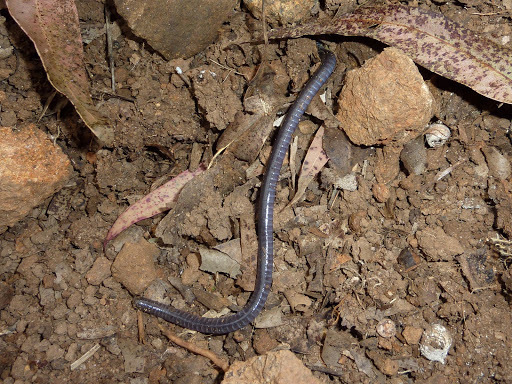
Photo: Photo: Milvus via Wikimedia Commons CC BY-SA 3.0
Overview
Boulengerula denhardti, commonly known as Denhardt's African caecilian, is a species of amphibian in the family Herpelidae. It is endemic to Kenya. It is only known from its type locality, the Tana River valley, as well as from the Ngaia Forest, Meru County.
It is named for German explorer brothers Clemens Denhardt and Gustav Denhardt who explored the area where it was discovered. Its natural habitats are subtropical or tropical moist lowland forests and heavily degraded former forest. It is threatened by habitat loss, expanding agriculture, use of herbicides and pesticides and expanding human settlements.
Boulengerula denhardti faces severe threats from agricultural expansion and soil degradation in its extremely limited range in the Taita Hills of Kenya. The species' fossorial lifestyle makes it particularly vulnerable to soil compaction from livestock grazing and cultivation practices that destroy the loose, organic-rich soils it requires for burrowing. Deforestation for agriculture and settlement has eliminated much of the native forest cover that maintains the soil conditions essential for this caecilian's survival.
Habitat
This fossorial caecilian inhabits loose, organic-rich soils in montane forest areas of the Taita Hills in southeastern Kenya. It requires well-structured soils with adequate moisture and organic matter that allow for efficient burrowing and foraging for soil invertebrates.
Conservation measures underway
Other threatened species in HERPELIDAE
Frequently asked questions
Why is Denhardt's Caecilian classified as Critically Endangered?
Where does Denhardt's Caecilian live?
What are the main threats to Denhardt's Caecilian?
Get weekly conservation intelligence
One short digest a week of the most striking species and country data we ship, plus breaking conservation news paired with our database where it matters.
Free, no spam. One-click unsubscribe in every email.