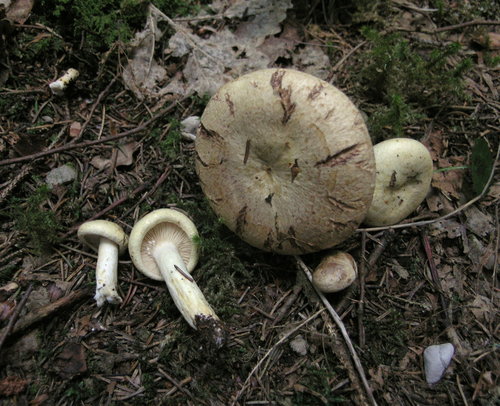
Lactarius flavidus
Photo: Photo: (c) Douglas Smith, all rights reserved, uploaded by Douglas Smith
Overview
Lactarius flavidus is a distinctive mycorrhizal mushroom species characterized by its yellowish cap and white latex that exudes when the fruiting body is damaged. This fungus forms essential symbiotic relationships with tree roots, facilitating nutrient exchange and supporting forest ecosystem health through its extensive underground mycelial networks.
Lactarius flavidus faces severe population decline primarily due to habitat loss from deforestation and forest fragmentation in its limited range. The species' specialized ecological requirements as a mycorrhizal fungus make it particularly vulnerable to changes in forest composition and soil chemistry. Climate change further threatens its survival by altering the delicate environmental conditions necessary for fruiting body formation.
Habitat
Lactarius flavidus occurs in mature deciduous and mixed forests, particularly in association with oak, beech, and other hardwood trees where it forms mycorrhizal partnerships. The species requires well-established forest soils with stable moisture levels and minimal disturbance to maintain its complex underground fungal networks.
Other threatened species in Russulaceae


Frequently asked questions
Why is Lactarius flavidus classified as Critically Endangered?
Where does Lactarius flavidus live?
What are the main threats to Lactarius flavidus?
Get weekly conservation intelligence
One short digest a week of the most striking species and country data we ship, plus breaking conservation news paired with our database where it matters.
Free, no spam. One-click unsubscribe in every email.