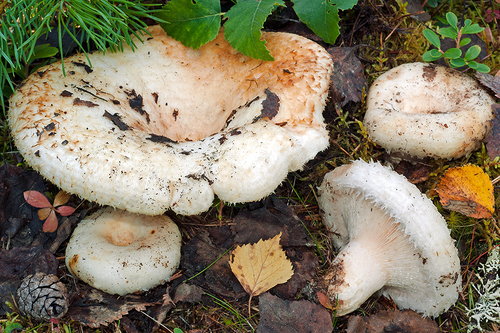
Lactarius aquizonatus
Photo: Photo: (c) Federico Calledda, some rights reserved (CC BY-NC), uploaded by Federico Calledda
Overview
Lactarius aquizonatus, known as the pale lemon milkcap, is a distinctive mycorrhizal fungus characterized by its pale yellow to cream-colored cap with darker concentric zones and white latex that exudes when damaged. This species forms essential symbiotic relationships with deciduous trees, particularly beech and oak, facilitating nutrient exchange and supporting forest ecosystem health.
Lactarius aquizonatus faces severe population decline primarily due to habitat loss from deforestation and agricultural conversion of its specialized forest ecosystems. As a mycorrhizal fungus dependent on specific host trees, it is particularly vulnerable to forest fragmentation and changes in forest composition. Climate change may further threaten this species by altering the delicate ecological conditions required for its survival.
Habitat
Lactarius aquizonatus occurs exclusively in mature deciduous forests, particularly old-growth beech-oak woodlands with rich, well-drained soils and established leaf litter layers. The species requires undisturbed forest floors with stable mycorrhizal networks and typically fruits in late summer to early autumn.
Other threatened species in Russulaceae


Frequently asked questions
Why is Lactarius aquizonatus classified as Critically Endangered?
Where does Lactarius aquizonatus live?
What are the main threats to Lactarius aquizonatus?
Get weekly conservation intelligence
One short digest a week of the most striking species and country data we ship, plus breaking conservation news paired with our database where it matters.
Free, no spam. One-click unsubscribe in every email.