La Hotte Bush Frog
Eleutherodactylus bakeri
Overview
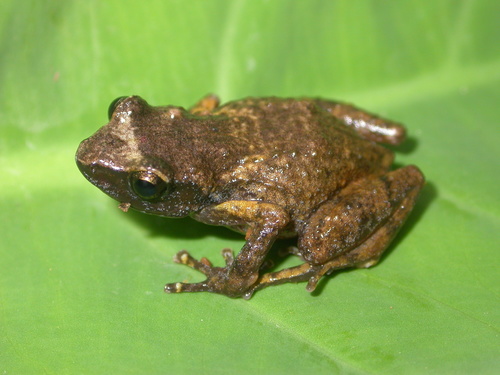
Eleutherodactylus bakeri, commonly known as Baker's coqui, is a small frog species endemic to Puerto Rico. This direct-developing frog belongs to the large genus Eleutherodactylus, characterized by their ability to complete their entire life cycle on land without requiring aquatic environments for reproduction. The species was named after herpetologist Robert H.
Baker and represents one of the many endemic amphibians found in the Caribbean region. Baker's coqui inhabits montane forests in Puerto Rico, where it occupies specific microhabitats within the forest ecosystem. Like other members of its genus, this species likely feeds on small invertebrates and plays an important role in forest food webs.
The species faces significant conservation challenges that have led to its classification as Critically Endangered by the IUCN, with populations showing a decreasing trend. Primary threats include habitat loss and degradation due to deforestation, agricultural expansion, and urban development. Climate change poses additional risks through altered precipitation patterns and temperature regimes that can affect the species' forest habitat.
The introduction of invasive species and potential disease outbreaks, including chytrid fungus which has devastated amphibian populations globally, represent ongoing concerns. Conservation efforts for Puerto Rican endemic amphibians typically focus on habitat protection and restoration, monitoring of remaining populations, and research into the specific ecological requirements of threatened species. The species' restricted range and specialized habitat requirements make it particularly vulnerable to environmental changes.
Baker's coqui faces habitat loss from deforestation, agricultural expansion, and urban development in its Puerto Rican forest habitat. Climate change and invasive species pose additional risks to remaining populations. Disease threats, particularly chytrid fungus, represent a significant concern for this endemic amphibian.
Habitat
Baker's coqui inhabits montane forests in Puerto Rico, occupying specific microhabitats within these forest ecosystems. The species requires terrestrial forest environments for its direct-developing life cycle.
Conservation measures underway
Other threatened species in ELEUTHERODACTYLIDAE

Threatened in Haiti
Frequently asked questions
Why is La Hotte Bush Frog classified as Critically Endangered?
Where does La Hotte Bush Frog live?
What are the main threats to La Hotte Bush Frog?
Get weekly conservation intelligence
One short digest a week of the most striking species and country data we ship, plus breaking conservation news paired with our database where it matters.
Free, no spam. One-click unsubscribe in every email.