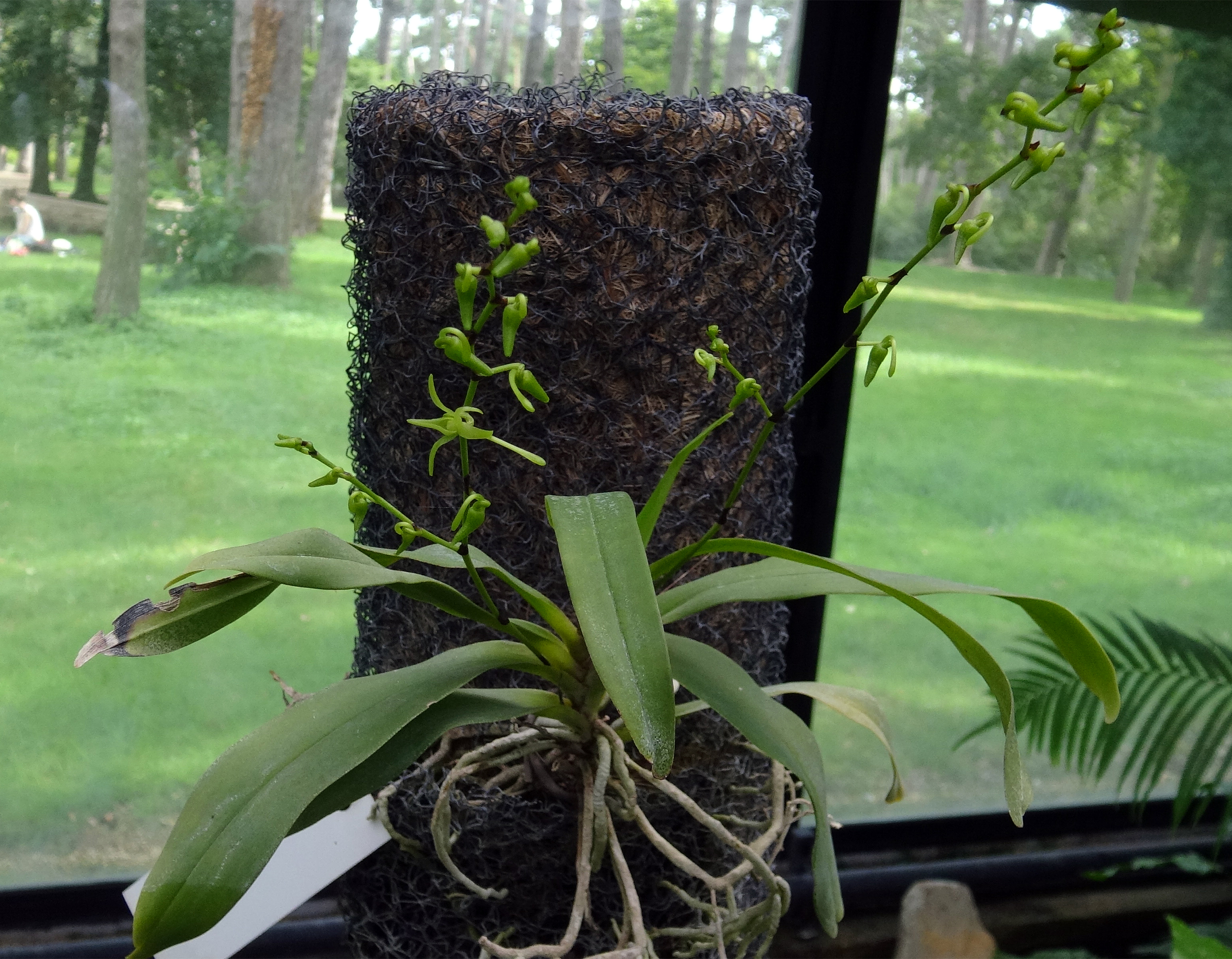
Angraecum calceolus
Photo: Wikimedia Commons (CC) via https://en.wikipedia.org/wiki/Angraecum_calceolus
Overview
Kouzi keli (Angraecum calceolus) is a rare epiphytic orchid endemic to Madagascar, characterized by its distinctive white, waxy flowers with an elongated spur and thick, leathery leaves. This species plays a crucial ecological role as a specialized pollinator partner with hawkmoths, contributing to the intricate web of Madagascar's unique forest ecosystems.
Angraecum calceolus faces severe threats primarily from habitat destruction due to deforestation and agricultural expansion in its native Madagascar. The species' extremely limited range and small population size make it particularly vulnerable to environmental changes and human activities. Climate change and collection pressure for the horticultural trade further compound these threats.
Habitat
This orchid grows exclusively as an epiphyte on the trunks and branches of large trees in Madagascar's humid montane rainforests, typically at elevations between 800-1,500 meters. It requires the consistent moisture and filtered light conditions found in the forest canopy, often establishing in moss-covered bark crevices where organic matter accumulates.
Other threatened species in Orchidaceae
Frequently asked questions
Why is Angraecum calceolus classified as Critically Endangered?
Where does Angraecum calceolus live?
What are the main threats to Angraecum calceolus?
Get weekly conservation intelligence
One short digest a week of the most striking species and country data we ship, plus breaking conservation news paired with our database where it matters.
Free, no spam. One-click unsubscribe in every email.