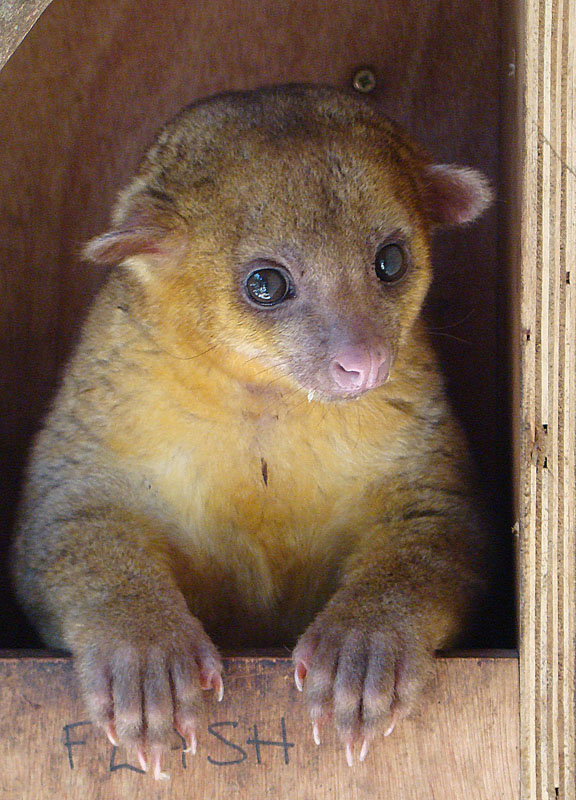
Kinkajou
Potos flavus
Photo: Wikimedia Commons (CC) via https://en.wikipedia.org/wiki/Kinkajou
Overview
A detailed profile for this species is sourced from the IUCN Red List of Threatened Species as assessments become available.
Kinkajou populations face mounting pressure from habitat destruction as tropical forests are cleared for agriculture, cattle ranching, and urban development throughout their range. The pet trade poses an additional significant threat, with kinkajous captured from the wild to supply both legal and illegal exotic animal markets due to their appealing appearance and docile nature. Their slow reproductive rate and specialized arboreal lifestyle make populations particularly vulnerable to fragmentation, as they require continuous forest canopy for movement and foraging.
Habitat
Kinkajous inhabit tropical rainforests from southern Mexico through Central America to northern South America, preferring dense canopy environments where they spend most of their lives in trees. They favor primary and secondary forests with abundant fruiting trees, particularly figs, and require continuous canopy cover for their strictly arboreal lifestyle.
Frequently asked questions
Why is Kinkajou classified as Vulnerable?
Where does Kinkajou live?
What are the main threats to Kinkajou?
Get weekly conservation intelligence
One short digest a week of the most striking species and country data we ship, plus breaking conservation news paired with our database where it matters.
Free, no spam. One-click unsubscribe in every email.