
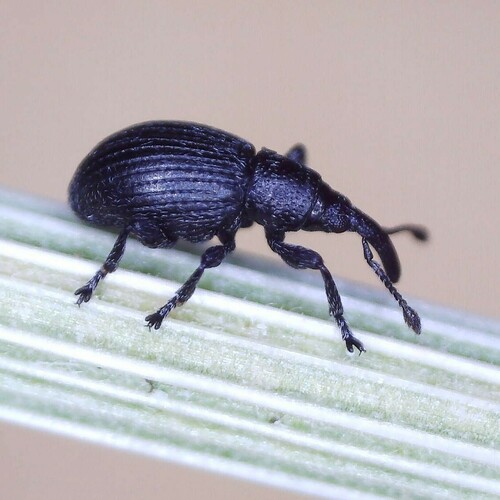
Diplapion confluens
Photo: Photo: Udo Schmidt from Deutschland via Wikimedia Commons CC BY-SA 2.0
Overview
Diplapion confluens is a small weevil species with a distinctive elongated rostrum and metallic sheen, measuring approximately 2-3mm in length. This specialized beetle plays a crucial ecological role as both herbivore and pollinator, feeding on specific flowering plants while inadvertently transferring pollen between blooms during its feeding activities.
Diplapion confluens, a specialized weevil species, faces severe population declines primarily due to habitat loss and degradation of its host plant communities. The species' narrow ecological requirements and limited dispersal ability make it particularly vulnerable to environmental changes and fragmentation of suitable habitats.
Habitat
This weevil inhabits calcareous grasslands and chalk downlands where its host plants thrive in well-drained, alkaline soils. It shows particular preference for areas with scattered scrubland and woodland edges that provide shelter and microclimatic stability.
Other threatened species in Apionidae
Frequently asked questions
Why is Diplapion confluens classified as Critically Endangered?
Where does Diplapion confluens live?
What are the main threats to Diplapion confluens?
Get weekly conservation intelligence
One short digest a week of the most striking species and country data we ship, plus breaking conservation news paired with our database where it matters.
Free, no spam. One-click unsubscribe in every email.