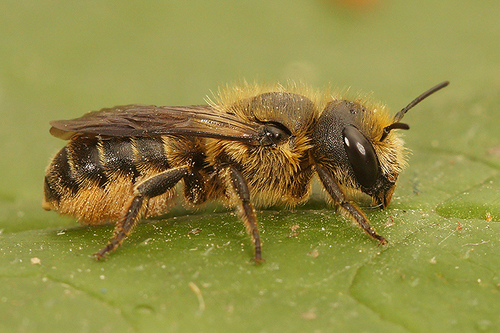
Jersey Mason Bee
Osmia niveata
Photo: Photo: (c) Henk Wallays, all rights reserved
Overview
The Jersey Mason Bee (Osmia niveata) is a solitary bee species with a distinctive white-banded abdomen and robust, dark body that measures approximately 10-12mm in length. This specialized pollinator plays a crucial role in maintaining coastal plant communities, particularly favoring spring-blooming wildflowers and shrubs. As a cavity-nesting species, it constructs individual brood cells in hollow stems, beetle burrows, and crevices in coastal cliffs.
The Jersey Mason Bee faces severe threats primarily from habitat loss due to coastal development and quarrying activities that destroy its specialized nesting sites in soft sandstone cliffs. Climate change and sea level rise pose additional risks to its extremely limited coastal habitat on Jersey, while the species' tiny population size makes it vulnerable to stochastic events and genetic bottlenecks.
Habitat
This species inhabits coastal grasslands, cliff-top meadows, and sandy heathlands along maritime zones where it requires both nesting sites in natural cavities and access to diverse native flowering plants. It shows particular affinity for areas with soft rock faces, old stone walls, and stabilized sand dunes that provide suitable nesting substrates within foraging distance of coastal wildflower communities.
Other threatened species in Megachilidae
Frequently asked questions
Why is Jersey Mason Bee classified as Critically Endangered?
Where does Jersey Mason Bee live?
What are the main threats to Jersey Mason Bee?
Get weekly conservation intelligence
One short digest a week of the most striking species and country data we ship, plus breaking conservation news paired with our database where it matters.
Free, no spam. One-click unsubscribe in every email.