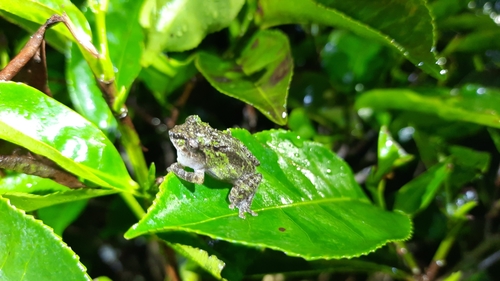
Jacobson's Bubble-nest Frog
Philautus jacobsoni
Photo: (c) Fajar Kaprawi, some rights reserved (CC BY-NC), uploaded by Fajar Kaprawi
Overview
Philautus jacobsoni is a critically endangered shrub frog endemic to Java, Indonesia. This small arboreal amphibian belongs to the family Rhacophoridae and was named after Dutch zoologist Edward Jacobson. The species inhabits montane forest environments where it breeds in small water bodies and vegetation.
Like many Philautus species, P. jacobsoni exhibits direct development, with eggs hatching directly into miniature frogs rather than passing through a free-swimming tadpole stage. The species faces severe population declines primarily due to extensive deforestation and habitat conversion throughout Java.
Indonesia's rapid agricultural expansion, urbanization, and logging activities have dramatically reduced the montane forest ecosystems upon which this species depends. Climate change poses additional threats by altering temperature and precipitation patterns in mountain environments. The species may also be vulnerable to chytrid fungus disease, which has devastated amphibian populations globally.
Java's high human population density and intensive land use have left few intact forest areas suitable for the species' survival. Conservation efforts for P. jacobsoni are limited, reflecting broader challenges in Indonesian amphibian conservation.
Protection of remaining montane forest fragments is essential for the species' persistence. Research into the species' specific ecological requirements, population status, and breeding biology remains necessary to develop effective conservation strategies. Without immediate habitat protection and restoration efforts, P.
jacobsoni faces a high risk of extinction in the near future.
Philautus jacobsoni faces severe threats from widespread deforestation and habitat conversion across Java's montane forests. Agricultural expansion, urbanization, and logging have dramatically reduced suitable forest habitat. Climate change and potential disease outbreaks pose additional risks to remaining populations.
Habitat
Philautus jacobsoni inhabits montane forest environments in Java, Indonesia. The species requires intact forest ecosystems with appropriate vegetation and small water bodies for breeding.
Conservation measures underway
Other threatened species in RHACOPHORIDAE
Threatened in Indonesia

Frequently asked questions
Why is Jacobson's Bubble-nest Frog classified as Critically Endangered?
Where does Jacobson's Bubble-nest Frog live?
What are the main threats to Jacobson's Bubble-nest Frog?
Get weekly conservation intelligence
One short digest a week of the most striking species and country data we ship, plus breaking conservation news paired with our database where it matters.
Free, no spam. One-click unsubscribe in every email.