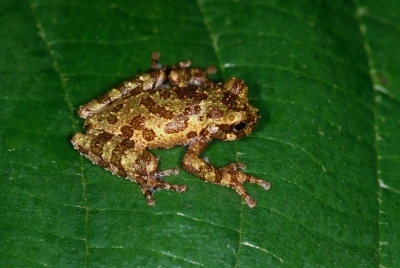
Isthmohyla calypsa
Photo: (c) STRI, some rights reserved (CC BY-NC)
Overview
Isthmohyla calypsa, the Calypsa tree frog is a critically endangered, possibly extinct species of frogs in the family Hylidae. It is known from the southern Cordillera de Talamanca in Costa Rica, Cerro Pando in Costa Rica and Panama, and the Pacific slope in southwestern Panama. It appears to now be extirpated from Costa Rica. Prior to its description in 1996, this species was confused with Isthmohyla lancasteri, a species now known from lower altitudes only.
Isthmohyla calypsa faces severe threats from habitat destruction due to deforestation, agricultural expansion, and urban development throughout its limited range in Central America. The species is particularly vulnerable to climate change impacts affecting montane cloud forest ecosystems, including altered precipitation patterns and temperature shifts that disrupt the delicate moisture balance these frogs require for survival.
Habitat
This species inhabits montane cloud forests and humid premontane forests at elevations typically between 1,200-2,400 meters. It is associated with primary and secondary forest areas with dense canopy cover, high humidity, and frequent fog or mist that characterizes cloud forest ecosystems.
Conservation measures underway
Other threatened species in HYLIDAE
Threatened in Costa Rica
Frequently asked questions
Why is Isthmohyla calypsa classified as Critically Endangered?
Where does Isthmohyla calypsa live?
What are the main threats to Isthmohyla calypsa?
Get weekly conservation intelligence
One short digest a week of the most striking species and country data we ship, plus breaking conservation news paired with our database where it matters.
Free, no spam. One-click unsubscribe in every email.