Hispaniolan Crowned Frog
Eleutherodactylus corona
Overview
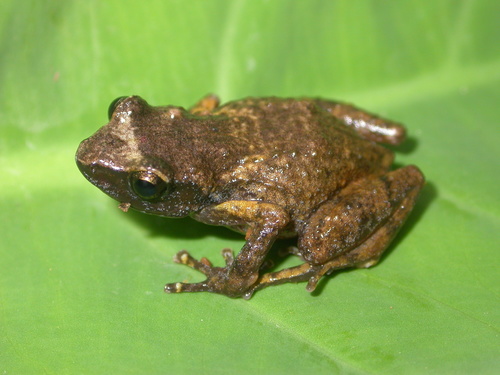
Eleutherodactylus corona is a species of frog in the family Eleutherodactylidae. It is endemic to the Massif de la Hotte, Haiti. The specific name corona is derived from the Latin word for "crown" and refers to the distinctive tubercles on the top of the head of these frogs. Common name Caye Paul robber frog has been coined for it.
Eleutherodactylus corona faces severe threats from habitat destruction due to agricultural expansion and urban development in its limited montane range. The species' extremely restricted distribution makes it particularly vulnerable to localized environmental changes, with deforestation for coffee cultivation and cattle ranching fragmenting its remaining forest habitat. Climate change poses an additional threat by altering the cool, humid conditions essential for this high-elevation endemic's survival.
Habitat
This species inhabits montane cloud forests and humid highland forests at elevations between 1,200-2,000 meters in the Caribbean mountains. It requires cool, moist microhabitats with dense vegetation cover, typically found in leaf litter and low vegetation of primary and secondary forest environments.
Conservation measures underway
Other threatened species in ELEUTHERODACTYLIDAE

Threatened in Haiti
Frequently asked questions
Why is Hispaniolan Crowned Frog classified as Critically Endangered?
Where does Hispaniolan Crowned Frog live?
What are the main threats to Hispaniolan Crowned Frog?
Get weekly conservation intelligence
One short digest a week of the most striking species and country data we ship, plus breaking conservation news paired with our database where it matters.
Free, no spam. One-click unsubscribe in every email.