Rhinoplax vigil
Overview
The helmeted hornbill is a very large bird in the hornbill family. It is found on the Malay Peninsula, Sumatra, Borneo, Thailand and Myanmar. The casque accounts for some 11% of its 3 kg weight. Unlike any other hornbill, the casque is almost solid, and is used in head-to-head combat among males. It is a belief among the Punan Bah that a large helmeted hornbill guards the river between life and death.
The Helmeted Hornbill faces severe population decline primarily due to intensive hunting for its solid casque, which is carved into valuable ornaments and traded illegally across Southeast Asia. Deforestation and habitat fragmentation have eliminated vast areas of the lowland and hill forests this species requires, while logging operations disrupt their specialized nesting sites in large tree cavities. The combination of high market demand for hornbill ivory and rapid forest conversion has pushed this once-widespread species to the brink of extinction across its range.
Habitat
Rhinoplax vigil inhabits primary and secondary lowland and hill forests up to 1,500 meters elevation across Southeast Asia. The species requires large, mature trees with suitable cavities for nesting and depends on fig trees and other fruiting species that provide its primary food sources.
Conservation measures underway
Other threatened species in BUCEROTIDAE
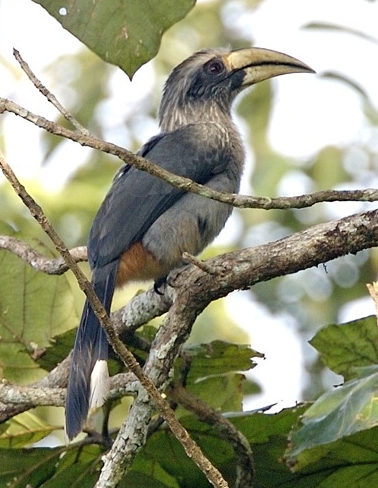


Threatened in Brunei
Frequently asked questions
Why is Rhinoplax vigil classified as Critically Endangered?
Where does Rhinoplax vigil live?
What are the main threats to Rhinoplax vigil?
Get weekly conservation intelligence
One short digest a week of the most striking species and country data we ship, plus breaking conservation news paired with our database where it matters.
Free, no spam. One-click unsubscribe in every email.