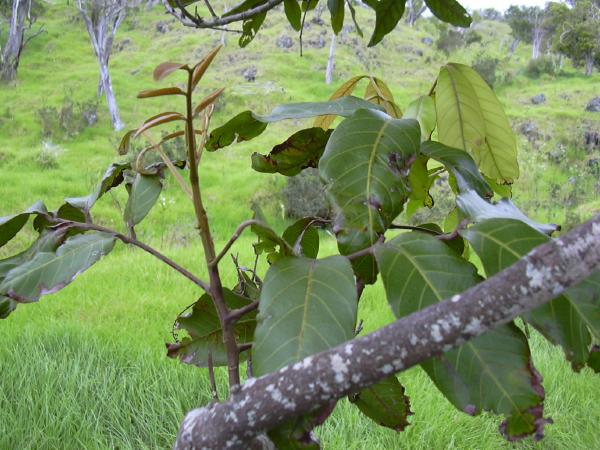
Hedge Maple
Acer campestre
Acer campestre, known as the field maple, is a flowering plant species in the family Sapindaceae. It is native to much of continental Europe, Britain, southwest Asia from Turkey to the Caucasus, and north Africa in the Atlas Mountains.
Photo: Wikimedia Commons (CC) via https://en.wikipedia.org/wiki/Acer_campestre
Taxonomy & Classification
Kingdom
Plantae
Phylum
Tracheophyta
Class
Magnoliopsida
Order
Sapindales
Family
Sapindaceae
Genus
Acer
Hedge Maple belongs to the family Sapindaceae, order Sapindales, within the Magnoliopsida class.
Species Profile
Acer campestre, known as the field maple, is a flowering plant species in the family Sapindaceae. It is native to much of continental Europe, Britain, southwest Asia from Turkey to the Caucasus, and north Africa in the Atlas Mountains. It has been widely planted, and is introduced outside its native range in Europe and areas of USA and Western Australia with suitable climate.
Hedge Maple faces severe population declines due to widespread habitat loss from agricultural intensification and urban development across its native European range. Ancient hedgerows and woodland edges that provide critical habitat have been systematically removed, while remaining populations suffer from fragmentation and degraded connectivity between suitable sites.
Key Facts
Habitat & Distribution
Native hedgerows, woodland margins, scrubland, and field boundaries across temperate European landscapes, typically on calcareous soils from sea level to 1000m elevation. Also occurs in mixed deciduous woodlands and forest edges where it forms part of the understory or secondary canopy.
Threats
IUCN Red List: Critically Endangered
Hedge Maple faces severe population declines due to widespread habitat loss from agricultural intensification and urban development across its native European range. Ancient hedgerows and woodland edges that provide critical habitat have been systematically removed, while remaining populations suffer from fragmentation and degraded connectivity between suitable sites.
Agricultural intensification and hedgerow removal
Habitat fragmentation
Urban and infrastructure development
Climate change altering suitable habitat zones
Competition from invasive plant species
National vs Global Threat Status
How this species is assessed at the national level compared to its IUCN global status (CR).
| Country | National Status | Global Status | Comparison |
|---|---|---|---|
| EU | LCLeast Concern | CRCritically Endangered | Lower local risk |
| EU | LCLeast Concern | CRCritically Endangered | Lower local risk |
National Red List data sourced from the National Red List Project (nationalredlist.org, ZSL) and country-specific Red List authorities.
Community Sightings
Report a sightingNo community sightings yet. Be the first to report!
Sources & Attribution
How to Cite
IUCN: IUCN (2025). The IUCN Red List of Threatened Species. Version 2025-1. Available at: https://www.iucnredlist.org. doi:10.2305/IUCN.UK.2025-1.RLTS
GBIF: GBIF.org (2025). GBIF Home Page. Available at: https://www.gbif.org
National Red Lists: ZSL (2025). National Red List. Zoological Society of London. Available at: https://www.nationalredlist.org
This page: SpeciesRadar (2025). Hedge Maple (Acer campestre). SpeciesRadar: Intelligence for Earth's Biodiversity. Available at: https://speciesradar.org/species/hedge-maple