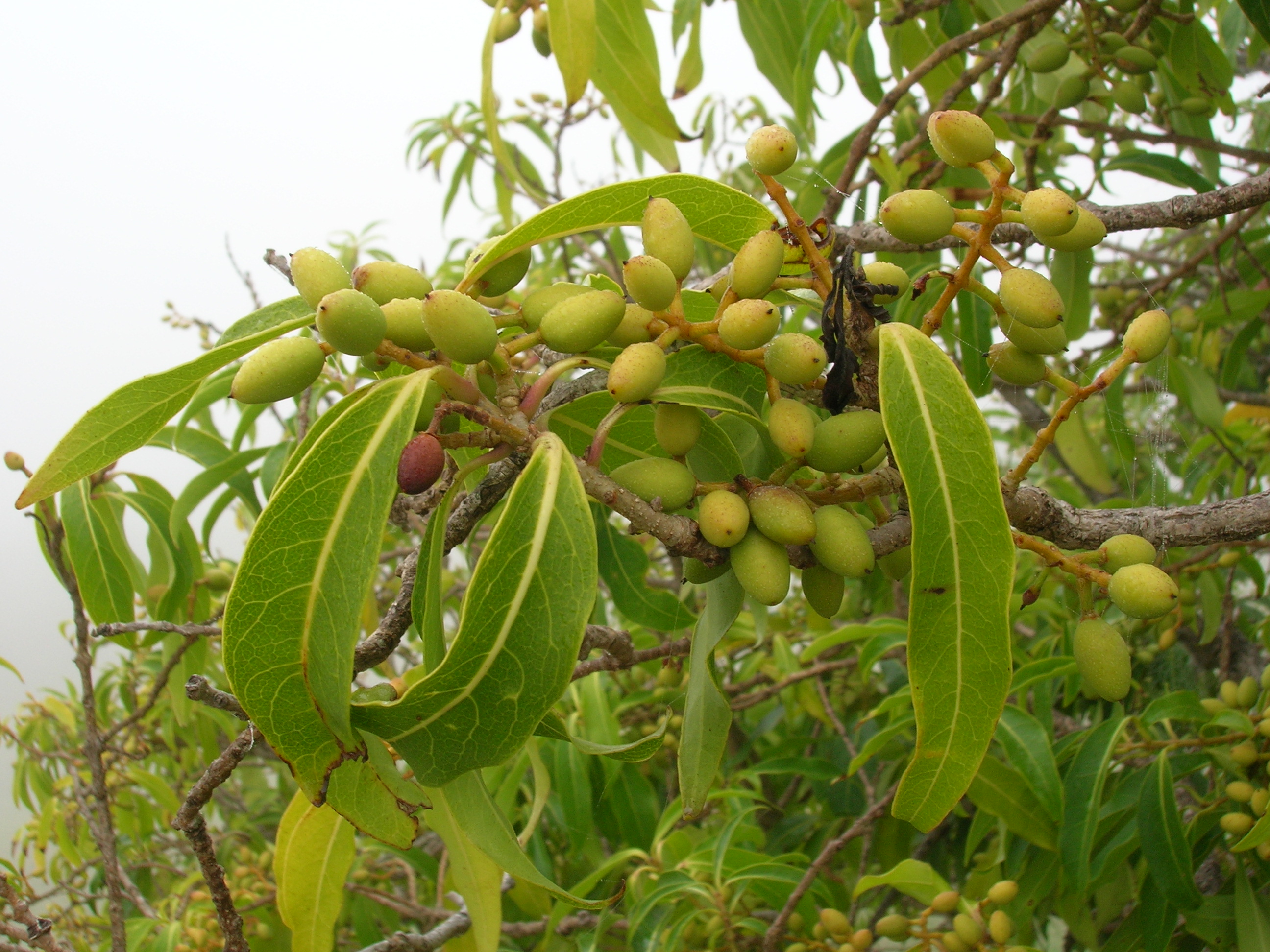
Hawai'i olive
Nestegis sandwicensis
Photo: Wikimedia Commons (CC) via https://en.wikipedia.org/wiki/Notelaea_sandwicensis
Overview
A detailed profile for this species is sourced from the IUCN Red List of Threatened Species as assessments become available.
The Hawai'i olive faces severe pressure from invasive plant species that outcompete native vegetation and alter forest composition in its limited range. Feral ungulates, particularly pigs and goats, damage the understory habitat through trampling and browsing, while also facilitating the spread of invasive weeds. Climate change poses an additional threat by shifting precipitation patterns and temperature ranges that could affect the species' montane forest habitat requirements.
Habitat
The Hawai'i olive inhabits native montane mesic and wet forests on the Hawaiian Islands, typically found at elevations between 300-1,200 meters. It grows in mixed native forest communities alongside other endemic Hawaiian trees such as koa and ʻōhiʻa lehua.
Other threatened species in Oleaceae


Frequently asked questions
Why is Hawai'i olive classified as Vulnerable?
Where does Hawai'i olive live?
What are the main threats to Hawai'i olive?
Get weekly conservation intelligence
One short digest a week of the most striking species and country data we ship, plus breaking conservation news paired with our database where it matters.
Free, no spam. One-click unsubscribe in every email.