Hatcher's Pawwort
Barbilophozia hatcheri
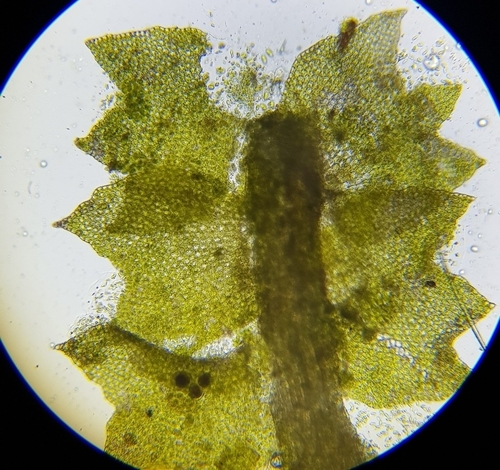
Hatcher's Pawwort is a small, leafy liverwort characterized by its distinctive three-lobed leaves and reddish-brown coloration when mature. This bryophyte forms low, creeping mats on acidic substrates and plays an important ecological role in soil stabilization and moisture retention in specialized microhabitats.
Taxonomy & Classification
Kingdom
Plantae
Phylum
Marchantiophyta
Class
Jungermanniopsida
Order
Jungermanniales
Family
Anastrophyllaceae
Genus
Barbilophozia
Hatcher's Pawwort belongs to the family Anastrophyllaceae, order Jungermanniales, within the Jungermanniopsida class.
Species Profile
Hatcher's Pawwort is a small, leafy liverwort characterized by its distinctive three-lobed leaves and reddish-brown coloration when mature. This bryophyte forms low, creeping mats on acidic substrates and plays an important ecological role in soil stabilization and moisture retention in specialized microhabitats.
Hatcher's Pawwort faces severe threats from habitat degradation due to climate change, particularly warming temperatures and altered precipitation patterns affecting its specialized montane bryophyte communities. The species' extremely limited range and small population size make it highly vulnerable to stochastic events and ongoing environmental changes in its restricted alpine habitat.
Key Facts
Habitat & Distribution
Hatcher's Pawwort grows exclusively on acidic, nutrient-poor soils and decaying organic matter in montane and subalpine environments. It typically colonizes exposed mineral soil along stream banks, cliff faces, and disturbed areas where competition from vascular plants is minimal.
Threats
IUCN Red List: Endangered
Hatcher's Pawwort faces severe threats from habitat degradation due to climate change, particularly warming temperatures and altered precipitation patterns affecting its specialized montane bryophyte communities. The species' extremely limited range and small population size make it highly vulnerable to stochastic events and ongoing environmental changes in its restricted alpine habitat.
Climate change and warming temperatures
Habitat degradation and fragmentation
Small population size and restricted range
Altered precipitation patterns
Potential trampling from recreational activities
National vs Global Threat Status
How this species is assessed at the national level compared to its IUCN global status (EN).
| Country | National Status | Global Status | Comparison |
|---|---|---|---|
| EU | LCLeast Concern | ENEndangered | Lower local risk |
| EU | LCLeast Concern | ENEndangered | Lower local risk |
National Red List data sourced from the National Red List Project (nationalredlist.org, ZSL) and country-specific Red List authorities.
Community Sightings
Report a sightingNo community sightings yet. Be the first to report!
Sources & Attribution
How to Cite
IUCN: IUCN (2025). The IUCN Red List of Threatened Species. Version 2025-1. Available at: https://www.iucnredlist.org. doi:10.2305/IUCN.UK.2025-1.RLTS
GBIF: GBIF.org (2025). GBIF Home Page. Available at: https://www.gbif.org
National Red Lists: ZSL (2025). National Red List. Zoological Society of London. Available at: https://www.nationalredlist.org
This page: SpeciesRadar (2025). Hatcher's Pawwort (Barbilophozia hatcheri). SpeciesRadar: Intelligence for Earth's Biodiversity. Available at: https://speciesradar.org/species/hatchers-pawwort