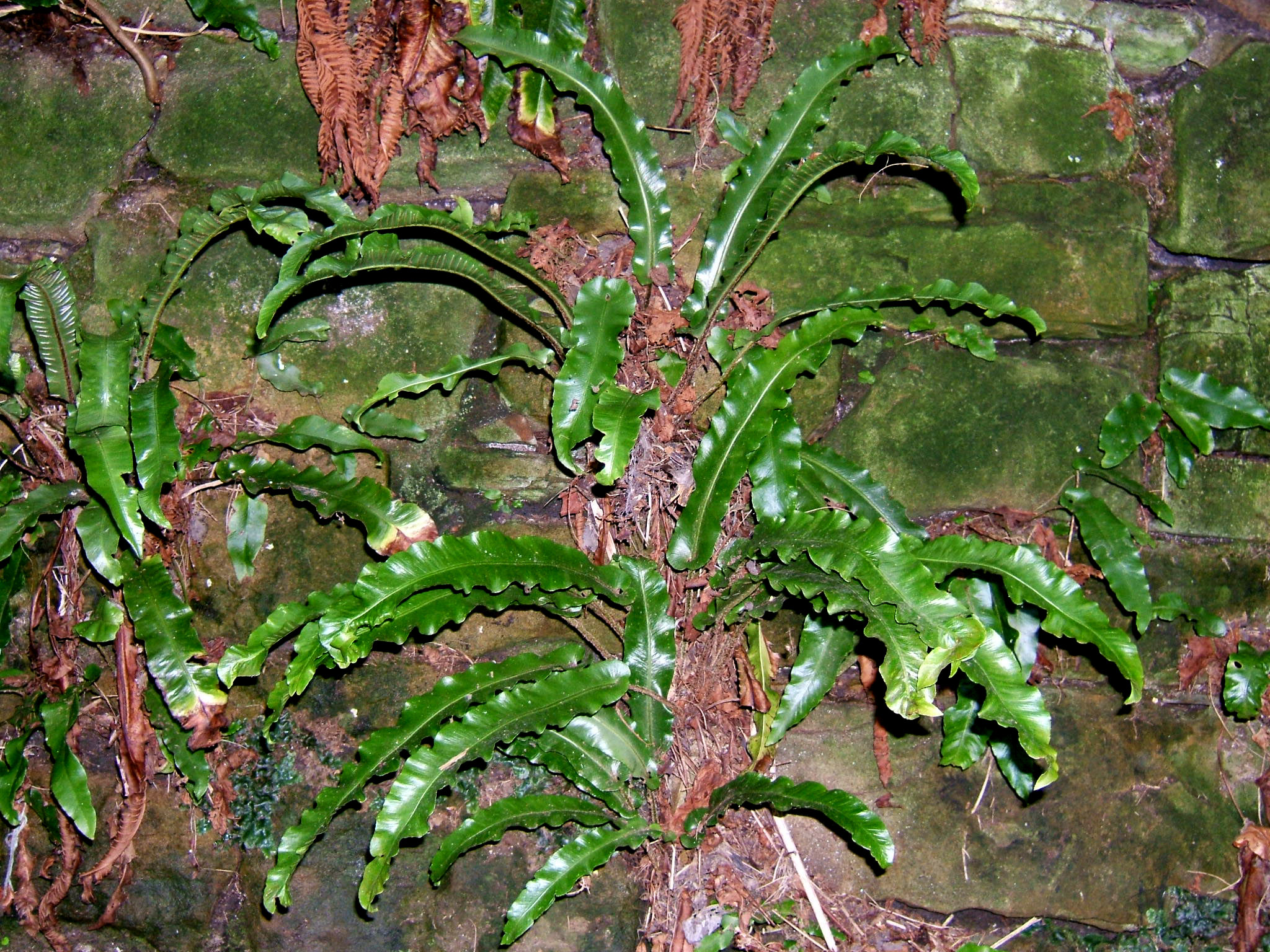
Hartstonque
ENEndangered

Hartstonque

Asplenium scolopendrium

Asplenium scolopendrium, commonly known as the hart's-tongue fern, is an evergreen fern in the family Aspleniaceae native to the Northern Hemisphere.

Photo: Wikimedia Commons (CC) via https://en.wikipedia.org/wiki/Asplenium_scolopendrium

01Classification

Taxonomy & Classification

Kingdom

Plantae

Phylum

Tracheophyta

Class

Polypodiopsida

Order

Polypodiales

Family

Aspleniaceae

Genus

Asplenium

Hartstonque belongs to the family Aspleniaceae, order Polypodiales, within the Polypodiopsida class.

02Description

Species Profile

Asplenium scolopendrium, commonly known as the hart's-tongue fern, is an evergreen fern in the family Aspleniaceae native to the Northern Hemisphere.

Hart's-tongue fern faces significant population declines primarily due to habitat loss and degradation from agricultural intensification, urban development, and quarrying activities that destroy its specialized limestone habitats. Climate change and increased drought frequency further threaten this moisture-dependent species, while invasive plant species compete for suitable growing sites in its remaining fragmented populations.

Key Facts

IUCN StatusEndangered (EN)
GroupPlants
03Habitat

Habitat & Distribution

Asplenium scolopendrium is a common species in the Old World: *The subspecies scolopendrium occurs throughout Europe (including the Caucasus and the British Isles). It is absent however in northeast Europe (Finland, Belarus, Latvia, Lithuania and European Russia). Beyond Europe, it is found in the Middle East, and North Africa (in Morocco, Algeria, Tunisia and Libya, as well as the Canary...

TERRESTRIALMajorTERRESTRIALMajor
04Threats

Threats

!

IUCN Red List: Endangered

Hart's-tongue fern faces significant population declines primarily due to habitat loss and degradation from agricultural intensification, urban development, and quarrying activities that destroy its specialized limestone habitats. Climate change and increased drought frequency further threaten this moisture-dependent species, while invasive plant species compete for suitable growing sites in its remaining fragmented populations.

Agricultural intensification and land conversion

HighOngoing

Habitat loss from quarrying and limestone extraction

HighOngoing

Climate change and increased drought stress

MediumOngoing

Competition from invasive plant species

MediumOngoing

Urban development and infrastructure expansion

MediumOngoing
07National Status

National vs Global Threat Status

How this species is assessed at the national level compared to its IUCN global status (EN).

CountryNational StatusGlobal StatusComparison
EULCLeast ConcernENEndangeredLower local risk

National Red List data sourced from the National Red List Project (nationalredlist.org, ZSL) and country-specific Red List authorities.

Community

Community Sightings

Report a sighting

No community sightings yet. Be the first to report!

07Sources

Sources & Attribution

How to Cite

IUCN: IUCN (2025). The IUCN Red List of Threatened Species. Version 2025-1. Available at: https://www.iucnredlist.org. doi:10.2305/IUCN.UK.2025-1.RLTS

GBIF: GBIF.org (2025). GBIF Home Page. Available at: https://www.gbif.org

National Red Lists: ZSL (2025). National Red List. Zoological Society of London. Available at: https://www.nationalredlist.org

This page: SpeciesRadar (2025). Hartstonque (Asplenium scolopendrium). SpeciesRadar: Intelligence for Earth's Biodiversity. Available at: https://speciesradar.org/species/hartstonque

Full citation guide & data usage terms