CRCritically Endangered

Riccia ciliata

Local name: hårig rosett

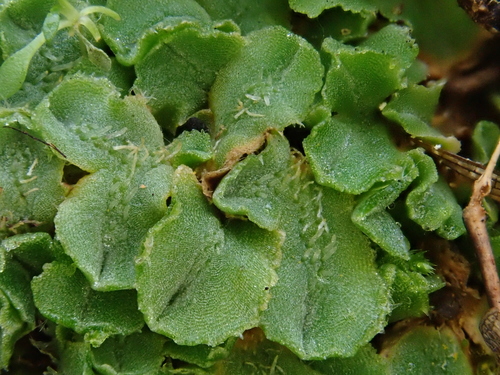
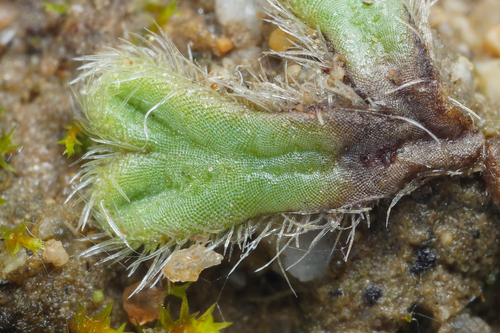
Riccia ciliata is a small thallose liverwort characterized by its distinctive hairy or ciliated margins that give it its common name 'hårig rosett' (hairy rosette). This bryophyte forms small, flat, ribbon-like green thalli that grow in rosette patterns on bare soil surfaces.

01Classification

Taxonomy & Classification

Kingdom

Plantae

Phylum

Marchantiophyta

Class

Marchantiopsida

Order

Marchantiales

Family

Ricciaceae

Genus

Riccia

Riccia ciliata belongs to the family Ricciaceae, order Marchantiales, within the Marchantiopsida class.

02Description

Species Profile

Riccia ciliata is a small thallose liverwort characterized by its distinctive hairy or ciliated margins that give it its common name 'hårig rosett' (hairy rosette). This bryophyte forms small, flat, ribbon-like green thalli that grow in rosette patterns on bare soil surfaces. As a pioneer species, it plays a crucial role in soil stabilization and provides microhabitat for other small organisms in early successional communities.

Riccia ciliata faces severe threats primarily from habitat loss and degradation of its specialized wetland environments. The species requires specific moisture conditions and substrate types that are increasingly rare due to human activities and climate change. Its extremely limited distribution makes it particularly vulnerable to local extinctions.

Key Facts

IUCN StatusCritically Endangered (CR)
GroupPlants
03Habitat

Habitat & Distribution

Riccia ciliata typically inhabits the muddy margins of temporary pools, ditches, and seasonally flooded areas where it colonizes bare, mineral-rich soils. It thrives in areas with fluctuating water levels that experience periodic drying, often found alongside other ephemeral wetland specialists in agricultural landscapes and floodplains.

04Threats

Threats

!

IUCN Red List: Critically Endangered

Riccia ciliata faces severe threats primarily from habitat loss and degradation of its specialized wetland environments. The species requires specific moisture conditions and substrate types that are increasingly rare due to human activities and climate change. Its extremely limited distribution makes it particularly vulnerable to local extinctions.

Agricultural intensification

HighOngoing

Drainage of wetlands and water bodies

HighOngoing

Habitat loss and fragmentation

HighOngoing

Climate change and altered precipitation patterns

MediumOngoing

Pollution and eutrophication

MediumOngoing
07National Status

National vs Global Threat Status

How this species is assessed at the national level compared to its IUCN global status (CR).

CountryNational StatusGlobal StatusComparison
EUDDData DeficientCRCritically EndangeredLower local risk

National Red List data sourced from the National Red List Project (nationalredlist.org, ZSL) and country-specific Red List authorities.

Community

Community Sightings

Report a sighting

No community sightings yet. Be the first to report!

07Sources

Sources & Attribution

How to Cite

IUCN: IUCN (2025). The IUCN Red List of Threatened Species. Version 2025-1. Available at: https://www.iucnredlist.org. doi:10.2305/IUCN.UK.2025-1.RLTS

GBIF: GBIF.org (2025). GBIF Home Page. Available at: https://www.gbif.org

National Red Lists: ZSL (2025). National Red List. Zoological Society of London. Available at: https://www.nationalredlist.org

This page: SpeciesRadar (2025). Riccia ciliata (Riccia ciliata). SpeciesRadar: Intelligence for Earth's Biodiversity. Available at: https://speciesradar.org/species/harig-rosett

Full citation guide & data usage terms