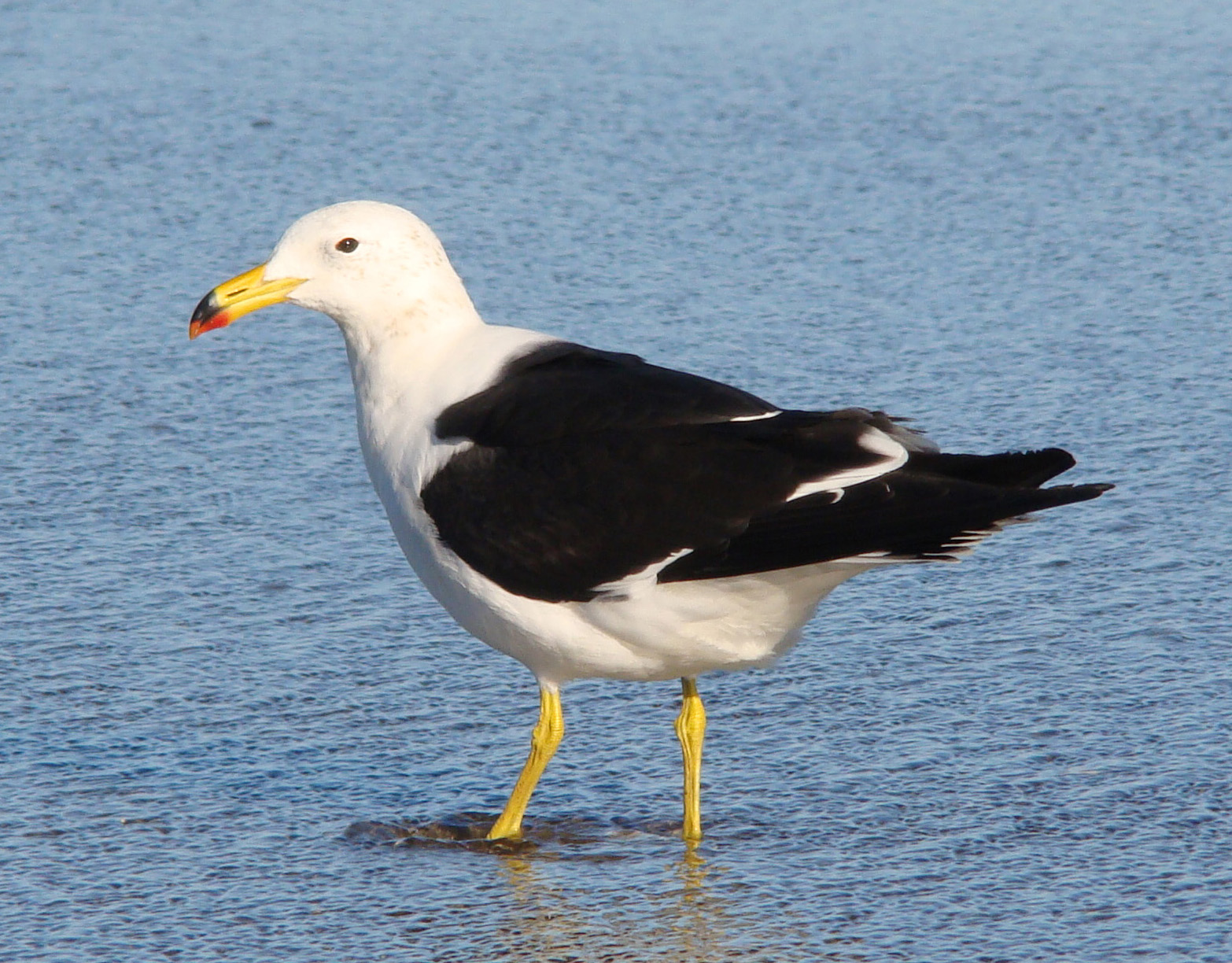
Gull-billed Tern
Gelochelidon nilotica
The gull-billed tern is a tern in the family Laridae. It is widely distributed and breeds in scattered localities in Europe, Asia, northwest Africa, and the Americas.
Photo: Wikimedia Commons (CC) via https://en.wikipedia.org/wiki/Gull-billed_tern
Taxonomy & Classification
Kingdom
Animalia
Phylum
Chordata
Class
Aves
Order
Charadriiformes
Family
Laridae
Genus
Gelochelidon
Gull-billed Tern belongs to the family Laridae, order Charadriiformes, within the Aves class.
Species Profile
The gull-billed tern is a tern in the family Laridae. It is widely distributed and breeds in scattered localities in Europe, Asia, northwest Africa, and the Americas. The Australian gull-billed tern was previously considered a subspecies.
The Gull-billed Tern faces severe population declines primarily due to habitat loss and degradation of coastal wetlands, nesting sites, and feeding areas. Human disturbance at breeding colonies, coastal development, and climate change impacts on sea levels and prey availability are driving this species toward extinction.
Key Facts
Habitat & Distribution
It breeds in warmer parts of the world in southern Europe, temperate and eastern Asia, both coasts of North America, eastern South America. This bird has a number of geographical races, differing mainly in size and minor plumage details. All forms show a post-breeding dispersal, but the northern breeders are most migratory, wintering south to Africa, the Caribbean and northern South America,...
Threats
IUCN Red List: Critically Endangered
The Gull-billed Tern faces severe population declines primarily due to habitat loss and degradation of coastal wetlands, nesting sites, and feeding areas. Human disturbance at breeding colonies, coastal development, and climate change impacts on sea levels and prey availability are driving this species toward extinction.
Coastal development and urbanization
Coastal habitat loss and wetland degradation
Human disturbance at breeding colonies
Climate change and sea level rise
Pollution and water quality degradation
National vs Global Threat Status
How this species is assessed at the national level compared to its IUCN global status (CR).
| Country | National Status | Global Status | Comparison |
|---|---|---|---|
| EU | LCLeast Concern | CRCritically Endangered | Lower local risk |
| EU | LCLeast Concern | CRCritically Endangered | Lower local risk |
National Red List data sourced from the National Red List Project (nationalredlist.org, ZSL) and country-specific Red List authorities.
Community Sightings
Report a sightingNo community sightings yet. Be the first to report!
Sources & Attribution
How to Cite
IUCN: IUCN (2025). The IUCN Red List of Threatened Species. Version 2025-1. Available at: https://www.iucnredlist.org. doi:10.2305/IUCN.UK.2025-1.RLTS
GBIF: GBIF.org (2025). GBIF Home Page. Available at: https://www.gbif.org
National Red Lists: ZSL (2025). National Red List. Zoological Society of London. Available at: https://www.nationalredlist.org
This page: SpeciesRadar (2025). Gull-billed Tern (Gelochelidon nilotica). SpeciesRadar: Intelligence for Earth's Biodiversity. Available at: https://speciesradar.org/species/gull-billed-tern