
Anguloa clowesii
Local name: Clowes’ Tulip Orchid
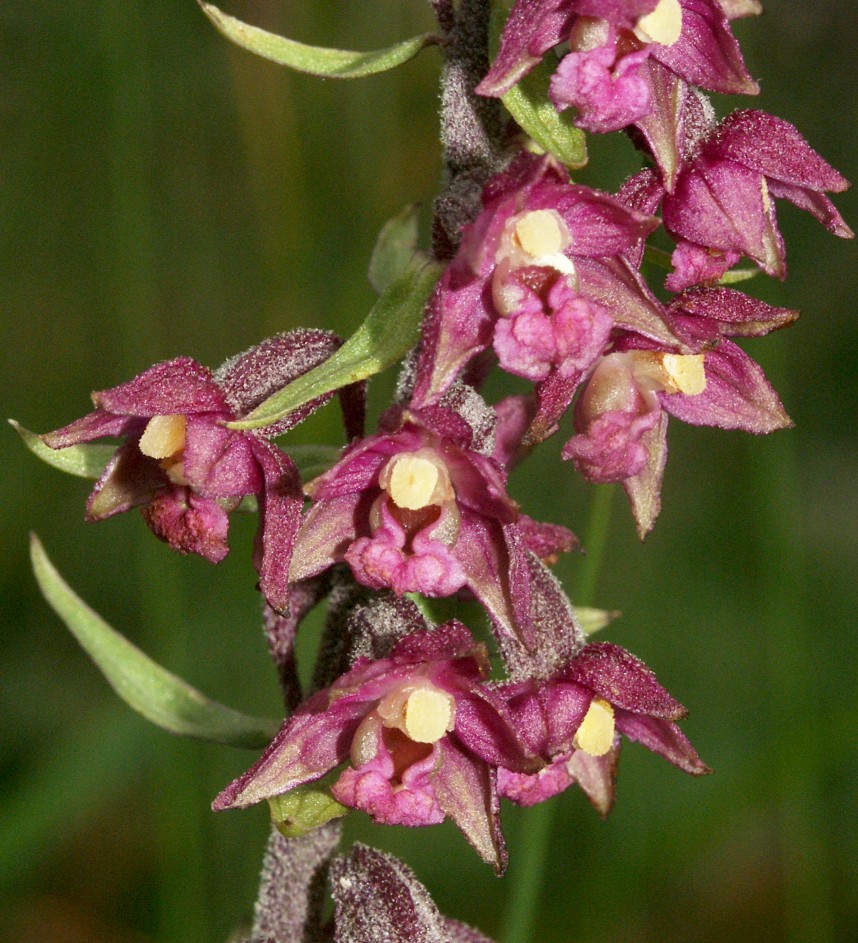
Photo: Wikimedia Commons (CC) via https://en.wikipedia.org/wiki/Anguloa_clowesii
Overview
Anguloa clowesii, commonly known as the tulip orchid or cradle orchid, is a large terrestrial orchid species native to the cloud forests of the northern Andes. This striking epiphyte produces waxy, tulip-shaped flowers that are typically yellow-green with intricate patterns and can reach up to 10 cm across. As a specialized orchid, it plays a crucial role in its ecosystem by maintaining complex relationships with specific mycorrhizal fungi and serving as a pollinator resource for various insects.
Anguloa clowesii faces severe population decline primarily due to habitat destruction from deforestation, agricultural expansion, and urban development in its native Andean cloud forest ecosystems. The species is also threatened by overcollection for the international orchid trade, as it is highly prized by collectors for its distinctive tulip-like flowers and fragrant blooms.
Habitat
This orchid inhabits the misty cloud forests of the northern Andes at elevations between 1,500-2,800 meters, where it grows as an epiphyte on moss-covered tree trunks and branches. It requires consistently cool temperatures, high humidity levels above 80%, and the filtered light conditions found beneath the forest canopy.
Other threatened species in Orchidaceae
Frequently asked questions
Why is Clowes’ Tulip Orchid classified as Endangered?
Where does Clowes’ Tulip Orchid live?
What are the main threats to Clowes’ Tulip Orchid?
Get weekly conservation intelligence
One short digest a week of the most striking species and country data we ship, plus breaking conservation news paired with our database where it matters.
Free, no spam. One-click unsubscribe in every email.