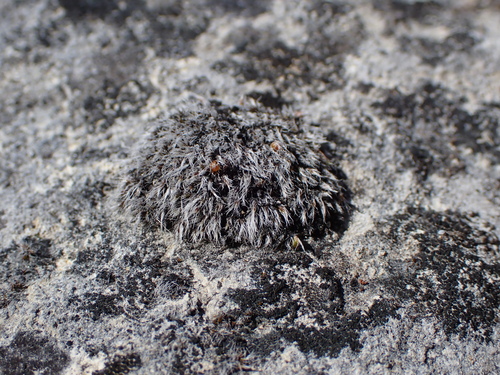
Grimmia Dry Rock Moss
Grimmia plagiopodia
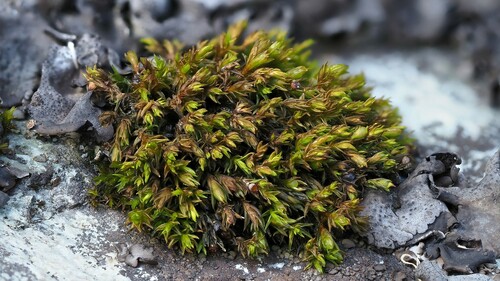
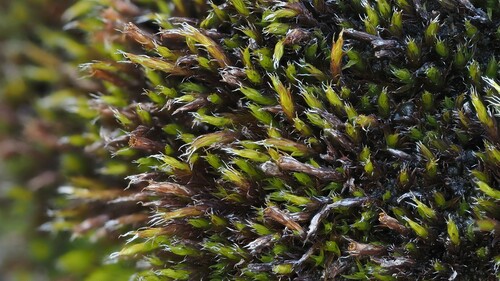
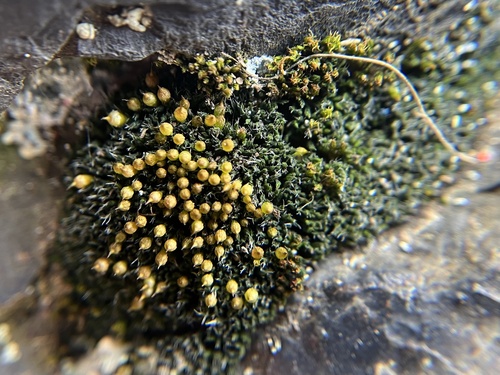
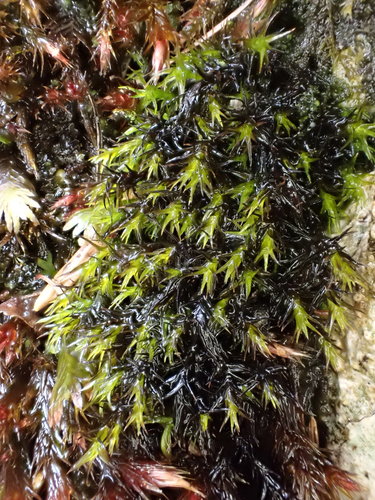
Grimmia plagiopodia is a small, cushion-forming moss species that grows in dense, dark green to blackish tufts on exposed rock surfaces. This bryophyte plays a crucial ecological role as a pioneer species, helping to stabilize soil and create microhabitats for other organisms in harsh, dry environments.
Taxonomy & Classification
Kingdom
Plantae
Phylum
Bryophyta
Class
Bryopsida
Order
Grimmiales
Family
Grimmiaceae
Genus
Grimmia
Grimmia Dry Rock Moss belongs to the family Grimmiaceae, order Grimmiales, within the Bryopsida class.
Species Profile
Grimmia plagiopodia is a small, cushion-forming moss species that grows in dense, dark green to blackish tufts on exposed rock surfaces. This bryophyte plays a crucial ecological role as a pioneer species, helping to stabilize soil and create microhabitats for other organisms in harsh, dry environments. Its specialized structure allows it to survive extreme desiccation by curling its leaves tightly when water is scarce.
Grimmia plagiopodia faces severe threats from habitat destruction and degradation of its specialized dry rock environments. Climate change and human activities such as quarrying, construction, and recreational activities are destroying the limited rocky outcrops and cliff faces where this moss species can survive. The species' extremely restricted range and specific habitat requirements make it particularly vulnerable to any environmental changes.
Key Facts
Habitat & Distribution
Grimmia plagiopodia inhabits exposed siliceous rock faces, cliff ledges, and boulder surfaces in montane and subalpine regions where it experiences extreme temperature fluctuations and prolonged dry periods. The species typically colonizes south-facing rock surfaces and crevices that receive intense solar radiation but have minimal soil accumulation.
Threats
IUCN Red List: Critically Endangered
Grimmia plagiopodia faces severe threats from habitat destruction and degradation of its specialized dry rock environments. Climate change and human activities such as quarrying, construction, and recreational activities are destroying the limited rocky outcrops and cliff faces where this moss species can survive. The species' extremely restricted range and specific habitat requirements make it particularly vulnerable to any environmental changes.
Climate change altering moisture regimes
Extremely small population size and restricted range
Habitat destruction from quarrying and construction
Air pollution affecting growth conditions
Recreational activities damaging rock surfaces
National vs Global Threat Status
How this species is assessed at the national level compared to its IUCN global status (CR).
| Country | National Status | Global Status | Comparison |
|---|---|---|---|
| EU | VUVulnerable | CRCritically Endangered | Lower local risk |
| EU | VUVulnerable | CRCritically Endangered | Lower local risk |
National Red List data sourced from the National Red List Project (nationalredlist.org, ZSL) and country-specific Red List authorities.
Community Sightings
Report a sightingNo community sightings yet. Be the first to report!
Sources & Attribution
How to Cite
IUCN: IUCN (2025). The IUCN Red List of Threatened Species. Version 2025-1. Available at: https://www.iucnredlist.org. doi:10.2305/IUCN.UK.2025-1.RLTS
GBIF: GBIF.org (2025). GBIF Home Page. Available at: https://www.gbif.org
National Red Lists: ZSL (2025). National Red List. Zoological Society of London. Available at: https://www.nationalredlist.org
This page: SpeciesRadar (2025). Grimmia Dry Rock Moss (Grimmia plagiopodia). SpeciesRadar: Intelligence for Earth's Biodiversity. Available at: https://speciesradar.org/species/grimmia-dry-rock-moss