ENEndangered

Pilosella dimorphoides

Local name: grenmarsvæve

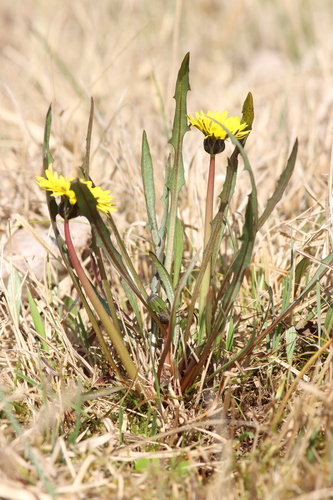
Grenmarsvæve (Pilosella dimorphoides) is a distinctive hawkweed species characterized by its dimorphic leaf structure, featuring both basal rosette leaves and reduced stem leaves with dense stellate hairs. This perennial herb plays a crucial role in specialized grassland ecosystems, providing nectar for rare pollinating insects and serving as a host plant for several endemic invertebrate species.

01Classification

Taxonomy & Classification

Kingdom

Plantae

Phylum

Tracheophyta

Class

Magnoliopsida

Order

Asterales

Family

Asteraceae

Genus

Pilosella

Pilosella dimorphoides belongs to the family Asteraceae, order Asterales, within the Magnoliopsida class.

02Description

Species Profile

Grenmarsvæve (Pilosella dimorphoides) is a distinctive hawkweed species characterized by its dimorphic leaf structure, featuring both basal rosette leaves and reduced stem leaves with dense stellate hairs. This perennial herb plays a crucial role in specialized grassland ecosystems, providing nectar for rare pollinating insects and serving as a host plant for several endemic invertebrate species.

Pilosella dimorphoides faces severe population decline primarily due to habitat loss from agricultural expansion and urban development in its limited range. Climate change and invasive species competition further threaten the remaining fragmented populations of this endemic hawkweed species.

Key Facts

IUCN StatusEndangered (EN)
GroupPlants
03Habitat

Habitat & Distribution

Grenmarsvæve occurs in nutrient-poor calcareous grasslands and rocky slopes at elevations between 200-800 meters, typically in areas with shallow soils over limestone bedrock. It requires sites with specific moisture regimes - well-drained but not drought-stressed - often found along transitional zones between dry meadows and scrubland margins.

TERRESTRIALMajor
04Threats

Threats

!

IUCN Red List: Endangered

Pilosella dimorphoides faces severe population decline primarily due to habitat loss from agricultural expansion and urban development in its limited range. Climate change and invasive species competition further threaten the remaining fragmented populations of this endemic hawkweed species.

Habitat loss from agricultural conversion

HighOngoing

Urban development and infrastructure expansion

HighOngoing

Climate change altering suitable habitat conditions

MediumOngoing

Competition from invasive plant species

MediumOngoing

Small population size and genetic bottlenecks

MediumOngoing
Community

Community Sightings

Report a sighting

No community sightings yet. Be the first to report!

07Sources

Sources & Attribution

How to Cite

IUCN: IUCN (2025). The IUCN Red List of Threatened Species. Version 2025-1. Available at: https://www.iucnredlist.org. doi:10.2305/IUCN.UK.2025-1.RLTS

GBIF: GBIF.org (2025). GBIF Home Page. Available at: https://www.gbif.org

This page: SpeciesRadar (2025). Pilosella dimorphoides (Pilosella dimorphoides). SpeciesRadar: Intelligence for Earth's Biodiversity. Available at: https://speciesradar.org/species/grenmarsvve

Full citation guide & data usage terms