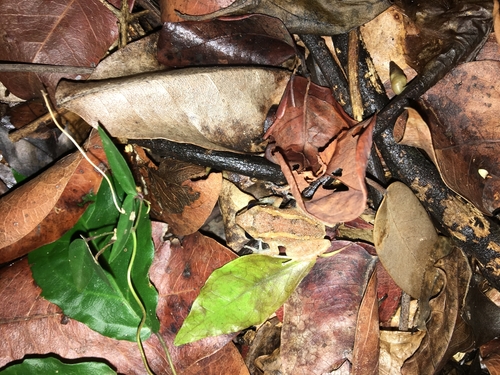
Grenada Frog
Pristimantis euphronides
Photo: (c) Wade Wilson, all rights reserved, uploaded by Wade Wilson
Overview
Pristimantis euphronides is a species of frog in the family Strabomantidae. It is endemic to Grenada, an island in the Lesser Antilles, the Caribbean. Is sometimes known as the Grenada frog. It was originally described as a subspecies of Eleutherodactylus urichi, but since 1994 it has been recognized as a full species.
Pristimantis euphronides faces severe threats from habitat destruction due to deforestation, agricultural expansion, and urban development within its limited range. The species' restricted distribution and specialized habitat requirements make it particularly vulnerable to environmental changes and human encroachment.
Habitat
This species inhabits cloud forests and montane humid forests at elevations between 1,500-2,500 meters in the Andes. It is typically found in primary forest with dense vegetation, leaf litter, and high humidity levels.
Conservation measures underway
Other threatened species in STRABOMANTIDAE
Threatened in Grenada

Frequently asked questions
Why is Grenada Frog classified as Critically Endangered?
Where does Grenada Frog live?
What are the main threats to Grenada Frog?
Get weekly conservation intelligence
One short digest a week of the most striking species and country data we ship, plus breaking conservation news paired with our database where it matters.
Free, no spam. One-click unsubscribe in every email.