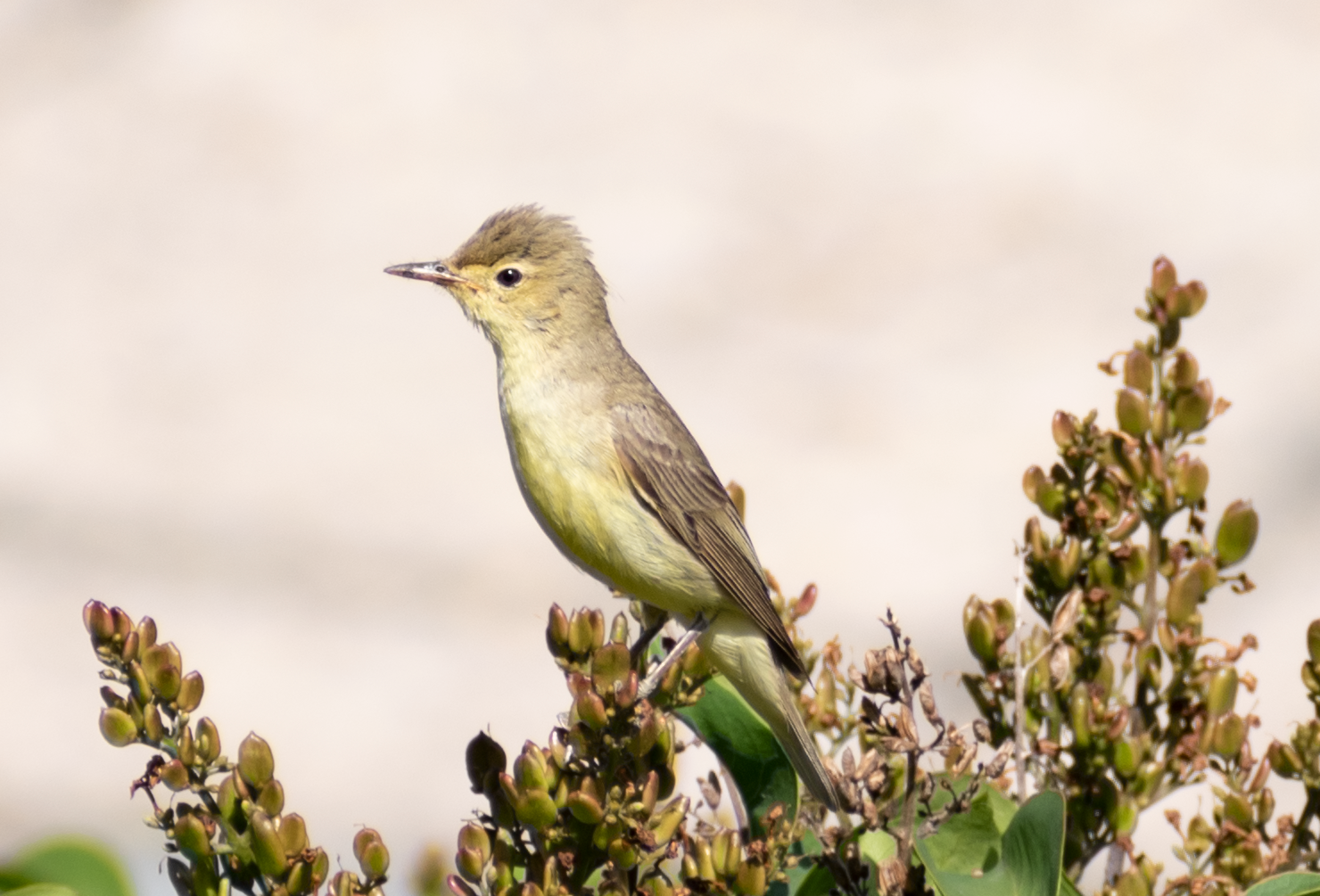
Great Reed Warbler
CRCritically Endangered

Great Reed Warbler

Acrocephalus arundinaceus

The great reed warbler is an insectivorous bird in the family Acrocephalidae. It is a medium-sized passerine bird and the largest of the European warblers.

Photo: Wikimedia Commons (CC) via https://en.wikipedia.org/wiki/Great_reed_warbler

01Classification

Taxonomy & Classification

Kingdom

Animalia

Phylum

Chordata

Class

Aves

Order

Passeriformes

Family

Acrocephalidae

Genus

Acrocephalus

Great Reed Warbler belongs to the family Acrocephalidae, order Passeriformes, within the Aves class.

02Description

Species Profile

The great reed warbler is an insectivorous bird in the family Acrocephalidae. It is a medium-sized passerine bird and the largest of the European warblers. It breeds throughout mainland Europe and the Western Palearctic and migrates to sub-Saharan Africa in the winter. It favours reed beds during the breeding season, while living in reed beds, bush thickets, rice fields, and forest clearings during the winter. It exhibits relatively low sexual dimorphism, and the sexes are similar in appearance. This species mates both polygynously and monogamously.

The Great Reed Warbler faces severe population declines primarily due to widespread destruction and degradation of wetland habitats across its breeding and wintering ranges. Agricultural intensification, urban development, and water management practices have eliminated crucial reed bed ecosystems, while climate change is altering precipitation patterns and water levels in remaining suitable habitats.

Key Facts

IUCN StatusCritically Endangered (CR)
GroupBirds
03Habitat

Habitat & Distribution

clutch of eggs]] The great reed warbler breeds in Europe and the west Palearctic. It does not breed in Great Britain, where only the closely related, smaller common reed warbler Acrocephalus scirpaceus occurs, but is an irregular visitor. Its population has in recent decades increased around the eastern Baltic Sea, while it has become rarer at the western end of its range. It is a migratory bird,...

FRESHWATERMajorTERRESTRIALMajor
04Threats

Threats

!

IUCN Red List: Critically Endangered

The Great Reed Warbler faces severe population declines primarily due to widespread destruction and degradation of wetland habitats across its breeding and wintering ranges. Agricultural intensification, urban development, and water management practices have eliminated crucial reed bed ecosystems, while climate change is altering precipitation patterns and water levels in remaining suitable habitats.

Agricultural intensification and land conversion

HighOngoing

Water management and drainage of wetlands

HighOngoing

Wetland habitat loss and degradation

HighOngoing

Climate change affecting water levels

MediumOngoing

Reed bed management practices

MediumOngoing
07National Status

National vs Global Threat Status

How this species is assessed at the national level compared to its IUCN global status (CR).

CountryNational StatusGlobal StatusComparison
EULCLeast ConcernCRCritically EndangeredLower local risk

National Red List data sourced from the National Red List Project (nationalredlist.org, ZSL) and country-specific Red List authorities.

Community

Community Sightings

Report a sighting

No community sightings yet. Be the first to report!

07Sources

Sources & Attribution

How to Cite

IUCN: IUCN (2025). The IUCN Red List of Threatened Species. Version 2025-1. Available at: https://www.iucnredlist.org. doi:10.2305/IUCN.UK.2025-1.RLTS

GBIF: GBIF.org (2025). GBIF Home Page. Available at: https://www.gbif.org

National Red Lists: ZSL (2025). National Red List. Zoological Society of London. Available at: https://www.nationalredlist.org

This page: SpeciesRadar (2025). Great Reed Warbler (Acrocephalus arundinaceus). SpeciesRadar: Intelligence for Earth's Biodiversity. Available at: https://speciesradar.org/species/great-reed-warbler

Full citation guide & data usage terms