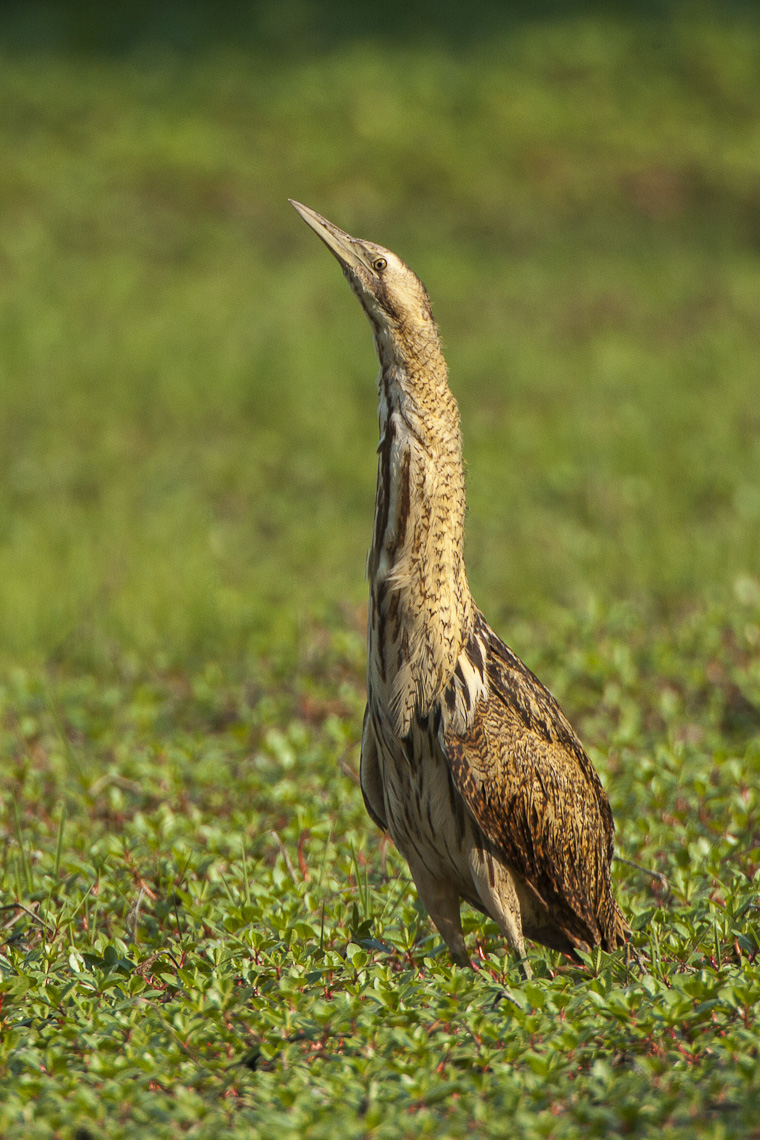
Bittern
Botaurus stellaris
Photo: Wikimedia Commons (CC) via https://en.wikipedia.org/wiki/Eurasian_bittern
Overview
A detailed profile for this species is sourced from the IUCN Red List of Threatened Species as assessments become available.
The Great Bittern faces severe population declines primarily due to wetland habitat destruction and degradation across its range. Reed bed drainage for agriculture, urban development, and water management has eliminated vast areas of suitable breeding habitat. Water pollution from agricultural runoff and industrial sources degrades remaining wetlands, while climate change alters water levels and vegetation composition in critical breeding areas.
Habitat
Great Bitterns inhabit large reed beds and marshes with dense Phragmites stands, requiring extensive areas of shallow water interspersed with emergent vegetation. They prefer secluded wetlands with minimal human disturbance, including natural lakes, constructed wetlands, and managed nature reserves with appropriate water level control.
Other threatened species in Ardeidae


Frequently asked questions
Why is Bittern classified as Vulnerable?
Where does Bittern live?
What are the main threats to Bittern?
Get weekly conservation intelligence
One short digest a week of the most striking species and country data we ship, plus breaking conservation news paired with our database where it matters.
Free, no spam. One-click unsubscribe in every email.