CRCritically Endangered

granlundsfibbla

Hieracium abiegni

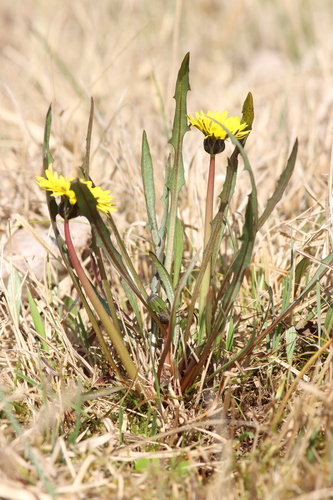
Hieracium abiegni is a rare perennial hawkweed species endemic to specific montane regions, characterized by its distinctive pale yellow flower heads and deeply lobed basal leaves with silvery undersides. This specialized herbaceous plant plays a crucial role in its alpine ecosystem by providing nectar for high-altitude pollinators and serving as a host plant for several endemic invertebrate species.

01Classification

Taxonomy & Classification

Kingdom

Plantae

Phylum

Tracheophyta

Class

Magnoliopsida

Order

Asterales

Family

Asteraceae

Genus

Hieracium

granlundsfibbla belongs to the family Asteraceae, order Asterales, within the Magnoliopsida class.

02Description

Species Profile

Hieracium abiegni is a rare perennial hawkweed species endemic to specific montane regions, characterized by its distinctive pale yellow flower heads and deeply lobed basal leaves with silvery undersides. This specialized herbaceous plant plays a crucial role in its alpine ecosystem by providing nectar for high-altitude pollinators and serving as a host plant for several endemic invertebrate species.

Granlundsfibbla faces severe threats from habitat loss due to forestry practices and infrastructure development in its specialized montane environments. Climate change poses additional risks by altering the cool, moist conditions this alpine hawkweed requires, while its extremely limited distribution makes populations vulnerable to local extinctions.

Key Facts

IUCN StatusCritically Endangered (CR)
GroupPlants
03Habitat

Habitat & Distribution

Specialized montane and subalpine environments, typically found in rocky outcrops, forest clearings, and meadows at higher elevations in Scandinavian mountain regions. Requires cool, moist conditions with well-drained soils and partial shade from surrounding coniferous forests.

TERRESTRIALMajor
04Threats

Threats

!

IUCN Red List: Critically Endangered

Granlundsfibbla faces severe threats from habitat loss due to forestry practices and infrastructure development in its specialized montane environments. Climate change poses additional risks by altering the cool, moist conditions this alpine hawkweed requires, while its extremely limited distribution makes populations vulnerable to local extinctions.

Climate change altering montane conditions

HighOngoing

Extremely restricted range vulnerability

HighOngoing

Habitat loss from forestry operations

HighOngoing

Infrastructure development and urbanization

HighOngoing

Recreational activities and trampling

MediumOngoing
Community

Community Sightings

Report a sighting

No community sightings yet. Be the first to report!

07Sources

Sources & Attribution

How to Cite

IUCN: IUCN (2025). The IUCN Red List of Threatened Species. Version 2025-1. Available at: https://www.iucnredlist.org. doi:10.2305/IUCN.UK.2025-1.RLTS

GBIF: GBIF.org (2025). GBIF Home Page. Available at: https://www.gbif.org

This page: SpeciesRadar (2025). granlundsfibbla (Hieracium abiegni). SpeciesRadar: Intelligence for Earth's Biodiversity. Available at: https://speciesradar.org/species/granlundsfibbla

Full citation guide & data usage terms