
rusty red click beetle
Elater ferrugineus
Photo: Wikimedia Commons (CC) via https://en.wikipedia.org/wiki/Elater_ferrugineus
Overview
Elater ferrugineus, the rusty click beetle, is a species of click beetle belonging to the family Elateridae.
The Grand Taupin roux (Elater ferrugineus) is critically endangered primarily due to the loss and fragmentation of old-growth deciduous forests, particularly those containing ancient oak and beech trees with extensive dead wood. Intensive forest management practices have eliminated the large quantities of decaying wood that this beetle's larvae require for development, while habitat fragmentation has isolated remaining populations.
Habitat
This species is widespread in the Western Palearctic realm.
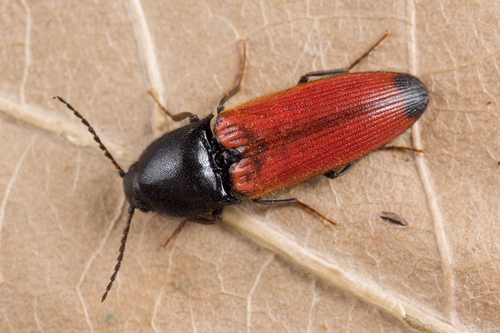
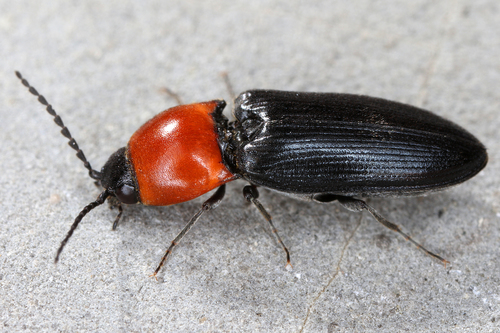
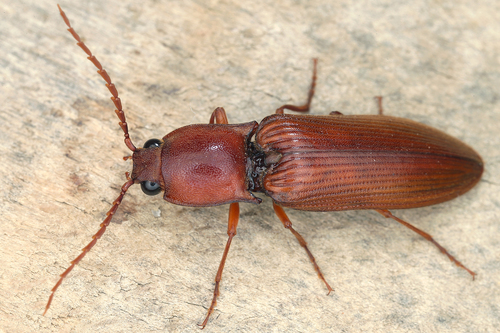
Other threatened species in Elateridae
Frequently asked questions
Why is rusty red click beetle classified as Critically Endangered?
Where does rusty red click beetle live?
What are the main threats to rusty red click beetle?
Get weekly conservation intelligence
One short digest a week of the most striking species and country data we ship, plus breaking conservation news paired with our database where it matters.
Free, no spam. One-click unsubscribe in every email.