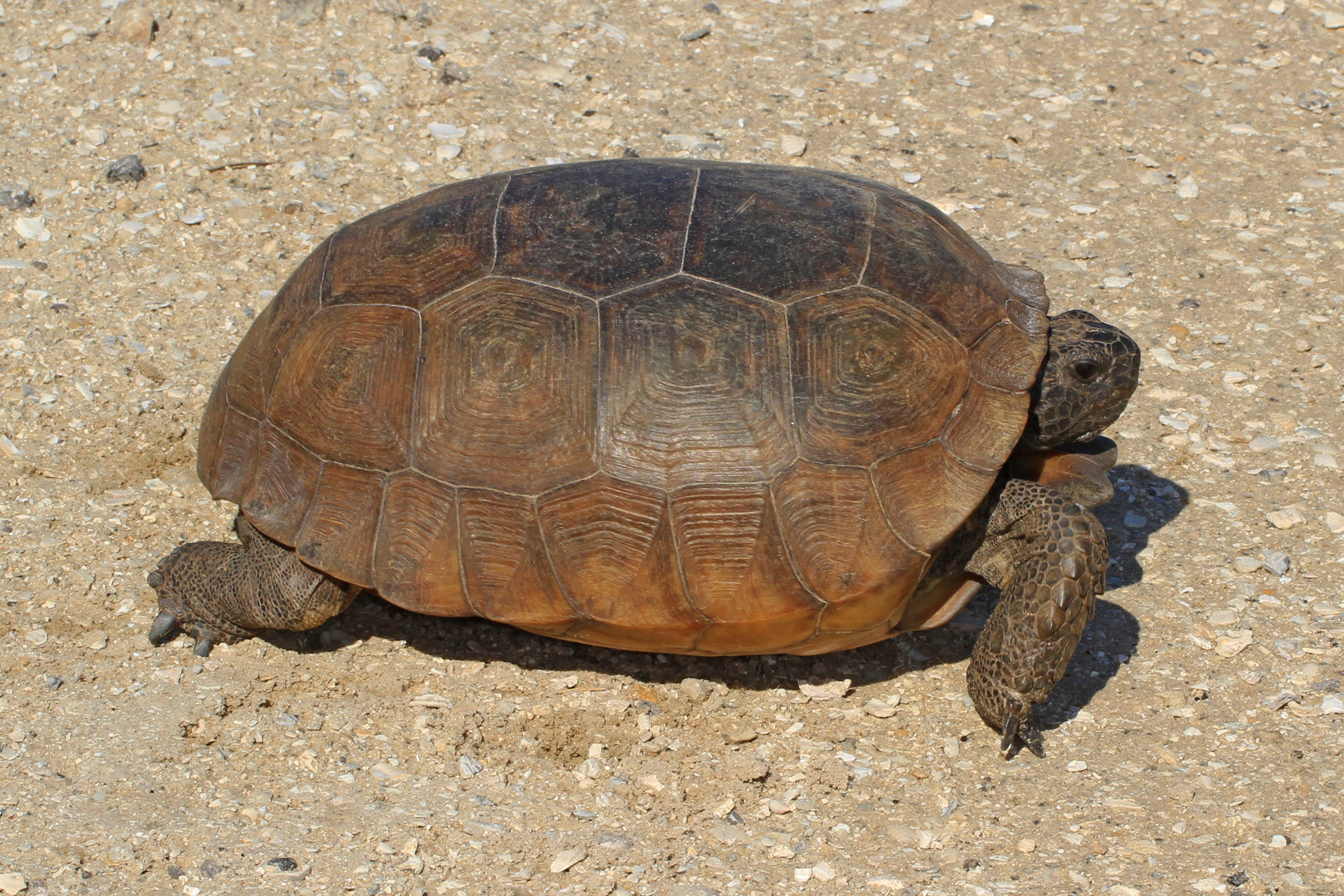
Gopherus polyphemus
Photo: Wikimedia Commons (CC) via https://en.wikipedia.org/wiki/Gopher_tortoise
Overview
The gopher tortoise is a species of tortoise in the family Testudinidae. The species is native to the Southeastern United States. The gopher tortoise is seen as a keystone species because it digs burrows that provide shelter for at least 360 other animal species.
G. polyphemus is threatened by predation and habitat destruction. The IUCN Red List of Threatened Species lists the gopher tortoise as "critically endangered," primarily because of habitat fragmentation and loss, and human exploitation; the animals are considered threatened in some states, while they are endangered in others.
The Gopher Tortoise faces severe population declines primarily due to habitat loss from urban development, agriculture, and forestry practices that eliminate the open, sandy ecosystems it requires. Road mortality poses a significant threat as tortoises move slowly across increasingly fragmented landscapes. Collection for food and the pet trade historically reduced populations, while disease outbreaks and invasive fire ants attacking eggs and juveniles compound modern conservation challenges.
Habitat
Gopher Tortoises inhabit well-drained, sandy soils in longleaf pine forests, scrub oak woodlands, coastal dunes, and dry prairies throughout the southeastern United States. They require open canopy habitats maintained by periodic fires, where they excavate extensive burrow systems that can extend 40 feet in length and provide shelter for over 350 other species.
Conservation measures underway
Other threatened species in TESTUDINIDAE


Frequently asked questions
Why is Gopherus polyphemus classified as Critically Endangered?
Where does Gopherus polyphemus live?
What are the main threats to Gopherus polyphemus?
Get weekly conservation intelligence
One short digest a week of the most striking species and country data we ship, plus breaking conservation news paired with our database where it matters.
Free, no spam. One-click unsubscribe in every email.