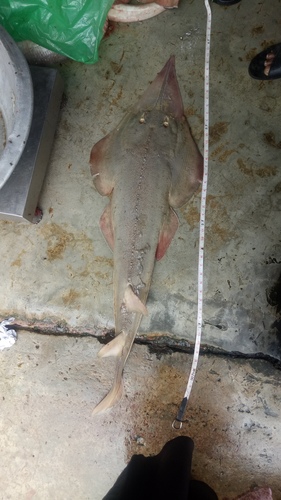
Ganges River Dolphin
ENEndangered

Ganges River Dolphin

Platanista gangetica

The Ganges River Dolphin, a functionally blind freshwater cetacean that navigates by echolocation, survives in small numbers in Nepal's Karnali, Narayani, and Sapta Koshi river systems. Nepal's population of approximately 30 individuals represents the species' upstream range limit.

~30 in Nepal

Estimated population

Decreasing

Population trend

5

Countries

Photo: Wikimedia Commons (CC) via https://en.wikipedia.org/wiki/Ganges_river_dolphin

01Classification

Taxonomy & Classification

Kingdom

Animalia

Phylum

Chordata

Class

Mammalia

Order

Artiodactyla

Family

Platanistidae

Genus

Platanista

Ganges River Dolphin belongs to the family Platanistidae, order Artiodactyla, within the Mammalia class.

02Description

Species Profile

The Ganges River Dolphin, a functionally blind freshwater cetacean that navigates by echolocation, survives in small numbers in Nepal's Karnali, Narayani, and Sapta Koshi river systems. Nepal's population of approximately 30 individuals represents the species' upstream range limit. These dolphins are indicators of river ecosystem health.

Dam construction (Koshi Barrage, Narayani barrages) fragments river habitat and prevents seasonal migrations. Bycatch in fishing nets, sand mining destroying deep pool habitat, pollution from agricultural runoff and urban waste, and declining fish stocks. Threats are intensifying.

Key Facts

IUCN StatusEndangered (EN)
Population~30 in Nepal
TrendDecreasing
GroupMammals
03Habitat

Habitat & Distribution

Marine coastal/supratidalMajorMarine neriticMajorWetlands — Permanent Rivers (Ganges system)MajorWetlands (inland) - Permanent rivers/streamsMajor
04Threats

Threats

!

IUCN Red List: Endangered

Dam construction (Koshi Barrage, Narayani barrages) fragments river habitat and prevents seasonal migrations. Bycatch in fishing nets, sand mining destroying deep pool habitat, pollution from agricultural runoff and urban waste, and declining fish stocks. Threats are intensifying.

Agricultural & forestry effluents

Ongoing

Annual & perennial non-timber crops

Ongoing

Dams & water management/use

Ongoing

Earthquakes/tsunamis

Ongoing

Fishing & harvesting aquatic resources

Ongoing

Garbage & solid waste

Ongoing

Habitat shifting & alteration

Ongoing

Housing & urban areas

Ongoing

Hunting & trapping terrestrial animals

Ongoing

Logging & wood harvesting

Ongoing

Other ecosystem modifications

Ongoing

Other threat

Ongoing

Shipping lanes

Ongoing

Storms & flooding

Ongoing

Type Unknown/Unrecorded (pollution)

Ongoing
05Conservation

Conservation Actions

Site/area protection
Habitat & natural process restoration
Species management
Species recovery
Species reintroduction
Ex-situ conservation
Legislation
Compliance and enforcement
Linked enterprises & livelihood alternatives
06Range

Found in 5 Countries

Community

Community Sightings

Report a sighting

No community sightings yet. Be the first to report!

07Sources

Sources & Attribution

How to Cite

IUCN: IUCN (2025). The IUCN Red List of Threatened Species. Version 2025-1. Available at: https://www.iucnredlist.org. doi:10.2305/IUCN.UK.2025-1.RLTS

GBIF: GBIF.org (2025). GBIF Home Page. Available at: https://www.gbif.org

This page: SpeciesRadar (2025). Ganges River Dolphin (Platanista gangetica). SpeciesRadar: Intelligence for Earth's Biodiversity. Available at: https://speciesradar.org/species/ganges-river-dolphin

Full citation guide & data usage terms