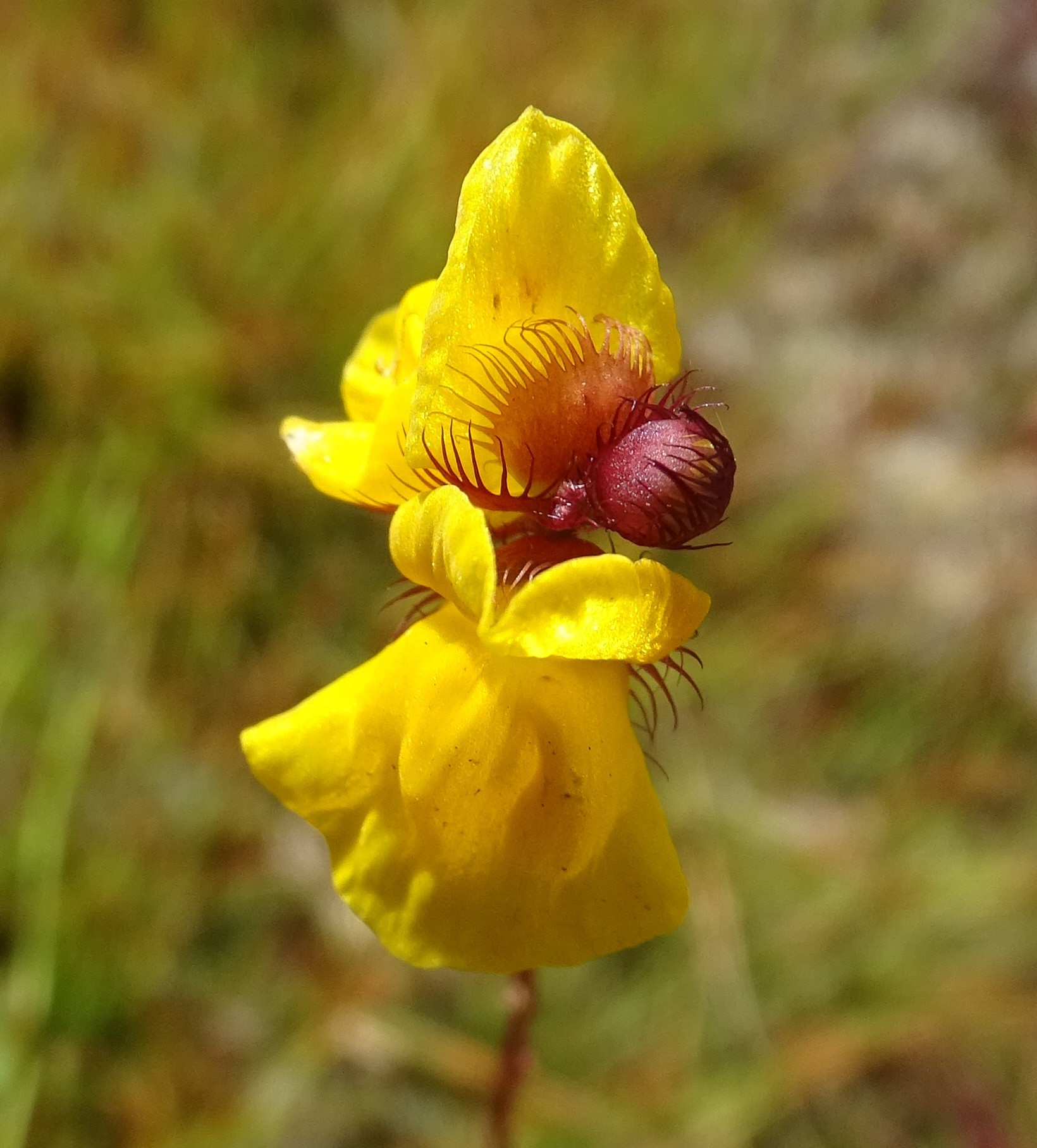
Fringed Bladderwort
Utricularia simulans
Photo: Wikimedia Commons (CC) via https://en.wikipedia.org/wiki/Utricularia_simulans
Overview
Utricularia simulans, the fringed bladderwort, is a small to medium-sized, probably perennial, species of carnivorous plant in the family Lentibulariaceae. Utricularia simulans is native to tropical Africa and the Americas. It grows as a terrestrial plant in damp, sandy soils in open savanna at altitudes from near sea level to 1,575 m (5,167 ft). U. simulans was originally described and published by Robert Knud Friedrich Pilger in 1914.
Fringed Bladderwort (Utricularia simulans) is critically endangered primarily due to habitat loss and degradation of its specialized wetland environments. The species is restricted to very few locations with specific water chemistry and hydrological conditions, making it extremely vulnerable to environmental changes and human disturbance.
Habitat
Other threatened species in Lentibulariaceae


Frequently asked questions
Why is Fringed Bladderwort classified as Critically Endangered?
Where does Fringed Bladderwort live?
What are the main threats to Fringed Bladderwort?
Get weekly conservation intelligence
One short digest a week of the most striking species and country data we ship, plus breaking conservation news paired with our database where it matters.
Free, no spam. One-click unsubscribe in every email.