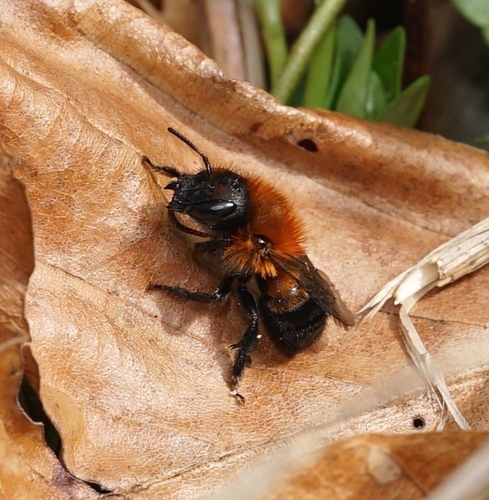
Fringe-horned Mason Bee
Osmia pilicornis
Photo: Photo: (c) sabine-g, some rights reserved (CC BY-NC)
Overview
The Fringe Horned Mason Bee is a distinctive solitary bee species characterized by prominent horn-like projections on the male's antennae that are fringed with specialized hairs. This medium-sized mason bee constructs individual brood cells using mud and plant materials, typically nesting in cavities within dead wood or rock crevices. As a specialized pollinator, it plays a crucial role in maintaining plant diversity within its native ecosystems.
The Fringe Horned Mason Bee faces severe population declines primarily due to habitat loss and degradation of its specialized nesting sites in coastal areas. Agricultural intensification, urban development, and changes in land management practices have eliminated much of the species' required habitat, while climate change may be altering the availability of suitable nesting conditions and food plants.
Habitat
The Fringe Horned Mason Bee inhabits mature deciduous and mixed woodlands with abundant dead standing timber and fallen logs that provide essential nesting cavities. It requires areas with diverse native wildflower meadows and woodland edges within close proximity to its nesting sites, particularly favoring locations with south-facing slopes that receive optimal sun exposure.
Other threatened species in Megachilidae
Frequently asked questions
Why is Fringe-horned Mason Bee classified as Critically Endangered?
Where does Fringe-horned Mason Bee live?
What are the main threats to Fringe-horned Mason Bee?
Get weekly conservation intelligence
One short digest a week of the most striking species and country data we ship, plus breaking conservation news paired with our database where it matters.
Free, no spam. One-click unsubscribe in every email.