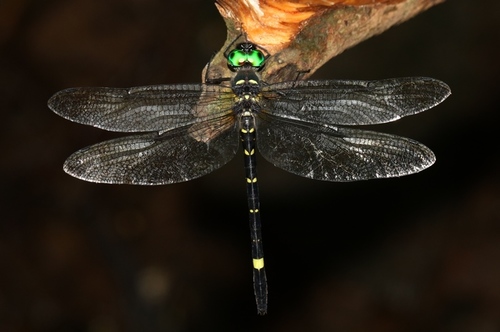
Macromia flinti
Local name: Flint’s Cruiser
Photo: (c) Nuwan Chathuranga, all rights reserved, uploaded by Nuwan Chathuranga
Overview
Macromia flinti is a critically endangered dragonfly species endemic to specific regions of North America. This large dragonfly belongs to the family Macromiidae, commonly known as river cruisers, and is characterized by its distinctive flight patterns and habitat requirements. The species was first described relatively recently in the taxonomic literature and remains one of the least understood members of its genus.
Macromia flinti inhabits clean, flowing water systems including streams and small rivers with specific water quality and vegetation characteristics. The species requires pristine aquatic environments for successful reproduction, as larvae develop in the water over multiple years before emerging as adults. Adult dragonflies are typically observed during specific seasonal periods when they engage in territorial and mating behaviors along waterways.
The primary threats to Macromia flinti include habitat degradation, water pollution, and alterations to natural flow regimes caused by human activities. Urban development, agricultural runoff, and dam construction have significantly impacted the quality and availability of suitable breeding habitats. Climate change may also affect water temperatures and seasonal patterns critical to the species' life cycle.
Conservation efforts for Macromia flinti are limited due to insufficient knowledge about its specific ecological requirements and population distribution. Research initiatives focus on identifying remaining populations and understanding habitat preferences to inform protection strategies. Habitat preservation and water quality improvement in known localities represent the most immediate conservation priorities for this critically endangered species.
Macromia flinti faces severe threats from habitat degradation and water pollution caused by urban development and agricultural activities. Dam construction and water flow alterations have disrupted the clean, flowing water systems essential for the species' reproduction and survival. Climate change may further impact water temperatures and seasonal patterns critical to the dragonfly's life cycle.
Habitat
Macromia flinti inhabits clean, flowing water systems including streams and small rivers with specific water quality requirements. The species requires pristine aquatic environments with appropriate vegetation characteristics for successful larval development and adult reproduction.
Conservation measures underway
Other threatened species in MACROMIIDAE

Threatened in Sri Lanka

Frequently asked questions
Why is Flint’s Cruiser classified as Critically Endangered?
Where does Flint’s Cruiser live?
What are the main threats to Flint’s Cruiser?
Get weekly conservation intelligence
One short digest a week of the most striking species and country data we ship, plus breaking conservation news paired with our database where it matters.
Free, no spam. One-click unsubscribe in every email.